UK Startup Oxa Raises $103 Million as Self-Driving Industry Splits Between Robotaxis and Industrial Sites
British autonomous vehicle firm Oxa secured $103 million to deploy self-driving trucks at ports and airports, while South Korean startups complain Hyundai is charging them $200,000 per test vehicle — exposing a deepening rift over who gets to build the future of autonomous transport.
The autonomous vehicle industry is fracturing into two distinct camps, and the latest funding rounds reveal which bet is actually attracting capital: forget robotaxis ferrying passengers through city streets — the real money is flowing toward self-driving forklifts, port trucks, and airport shuttlers operating in controlled industrial environments.
British startup Oxa announced Wednesday it raised $103 million in Series D funding, with $50 million coming from the UK's National Wealth Fund and additional investments from Nvidia's venture arm NVentures and BP Ventures, according to Reuters. The Oxford-based company has now raised over $250 million total, and its pitch is refreshingly blunt about why it's avoiding the consumer market entirely.
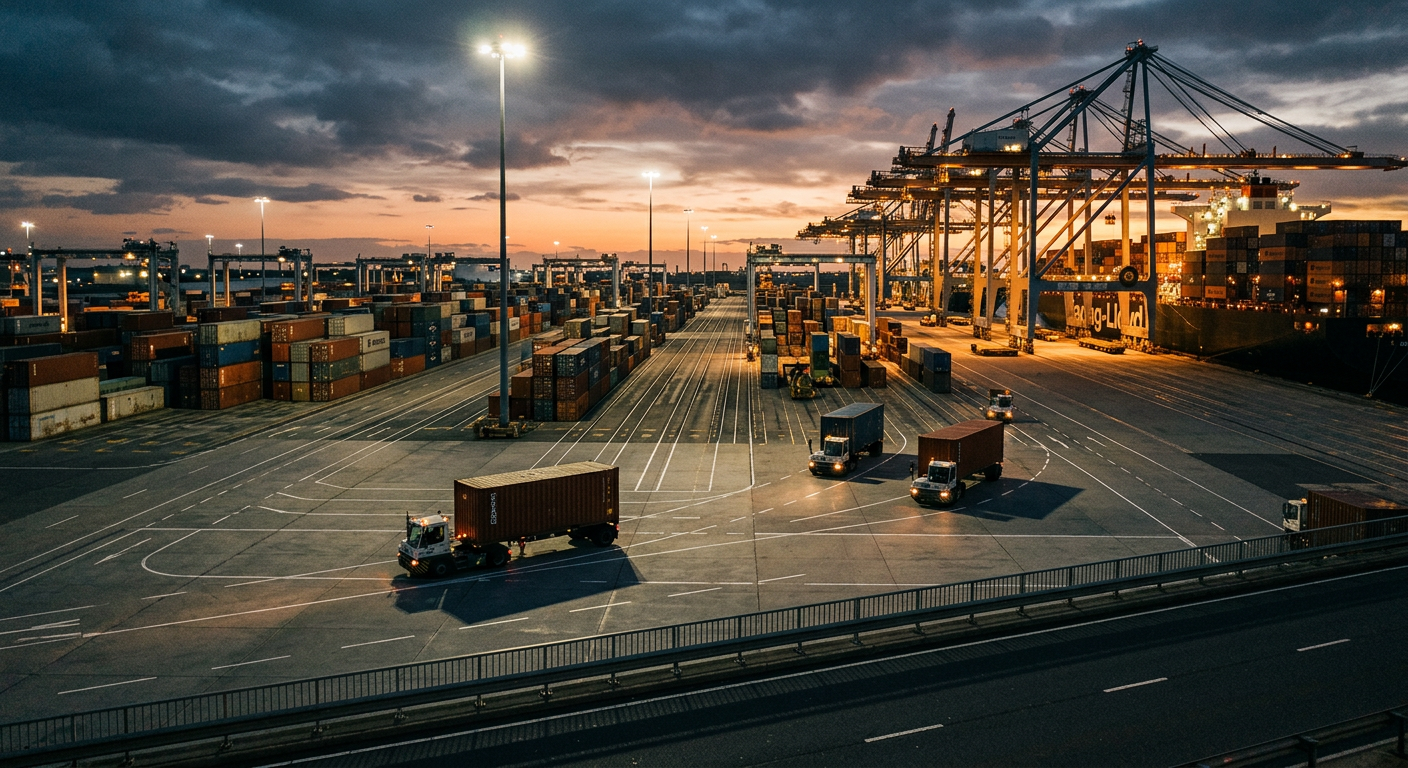
"We think trying to do that in the passenger car space is super, super hard," founder Paul Newman told Reuters. "In the industrial space, it's extremely clear what you need to do to make a product." Oxa designs software and hardware that can "autonomise" a heavy-duty port truck in under a day, deploying its technology with customers including DHL, BP, and logistics firm Vantec. Newman calls it "industrial mobile autonomy" — a category defined by less traffic, fewer pedestrians, and dramatically simpler edge cases than urban driving.
The contrast with consumer-focused robotaxi efforts is stark. Just last month, British rival Wayve raised $1.2 billion to work with Uber on passenger robotaxis and develop driver-assistance technology for automakers. Yet Oxa's approach — targeting ports, airports, and warehouses — appears to be the one investors believe will generate revenue first. The logic is sound: controlled environments mean fewer regulatory hurdles, predictable operating conditions, and customers who care more about cost savings than the thrill of a driverless ride.
Meanwhile, infrastructure itself is getting smarter. Researchers at Rice University have developed EyeDAR, an orange-sized radar sensor designed to be mounted on streetlights and traffic signals, according to Interesting Engineering. The device uses a 3D-printed Luneburg lens — modeled after the human eye, with over 8,000 tiny shaped elements — to catch radar signals that would normally scatter uselessly into the environment. In testing, EyeDAR resolved target directions 200 times faster than existing digital radar systems.
What makes EyeDAR clever is that it's "analog computing" — the physical structure of the resin bends radar waves toward a focal point, doing the math that digital processors struggle with. The sensor alternates between absorbing and reflecting radar waves to communicate with vehicles in a sequence of zeros and ones, what lead researcher Kun Woo Cho describes as "blinking Morse code." It's the first "talking sensor" to integrate radar sensing and communication into a single low-power design, and it works reliably in heavy rain, thick fog, and low light — conditions where cameras and lidar fail.
The idea is to upgrade roads rather than just cramming more expensive computers into cars. Cities could theoretically install these inexpensive sensors across every stop sign and traffic light, creating a safety net that detects hidden hazards — a pedestrian obscured by a truck, a car approaching an intersection — and relays that data to autonomous vehicles in real time. Beyond cars, the technology could enable drones, robots, and wearable devices to "see" through shared data networks.
But even as the technology matures, the business model remains contentious. In South Korea, the government's ambitious plan to deploy 200 autonomous vehicles in Gwangju — the entire city designated as experimental space for self-driving tests — has sparked a bitter dispute over vehicle costs. The Ministry of Land, Infrastructure and Transport is investing 60 billion won (around $41 million) in the program, but smaller firms and startups are growing increasingly concerned about procurement terms, according to The Korea Times.
Hyundai Motor is the sole supplier of test vehicles for the project, and during preliminary discussions, some companies were quoted 200 million won per unit — roughly $136,000. Participating companies receive a subsidy of 300 million won per vehicle (240 million won from the state, 60 million won from private investment), but that leaves little margin to cover research, development, and labor costs. The vehicles must be specifically engineered to operate primarily through software, built from the ground up like smartphones, which Hyundai argues justifies the price.
Startups are pushing back, urging Hyundai to treat the program as a strategic investment and lower supply prices. They point out that Hyundai's IONIQ 5 — already used by Alphabet's Waymo — is priced around 60 million won per unit, roughly $41,000. The Korea Times reported that the Ministry of Land, Infrastructure and Transport said vehicle pricing has not yet been finalized and discussions with Hyundai are ongoing.
The tension in Gwangju reflects a broader question about who gets to build the autonomous future. Oxa's industrial focus and Hyundai's control over test vehicle supply both point to the same reality: the companies with capital and existing infrastructure are defining the terms. Smaller firms, even those with promising software, are finding themselves squeezed by procurement costs and partnership dynamics that favor incumbents.
What's clear is that the autonomous vehicle industry is no longer a single race toward a universal vision of driverless cars. It's splitting into distinct markets — consumer robotaxis, industrial logistics, infrastructure-based sensing — each with its own timeline, risk profile, and capital requirements. Oxa's $103 million raise and the deployment of roadside radar sensors like EyeDAR suggest the near-term winners will be those solving narrower, more predictable problems. The dream of fully autonomous passenger cars navigating chaotic city streets remains elusive, expensive, and far harder to fund than a self-driving forklift that never leaves the warehouse.