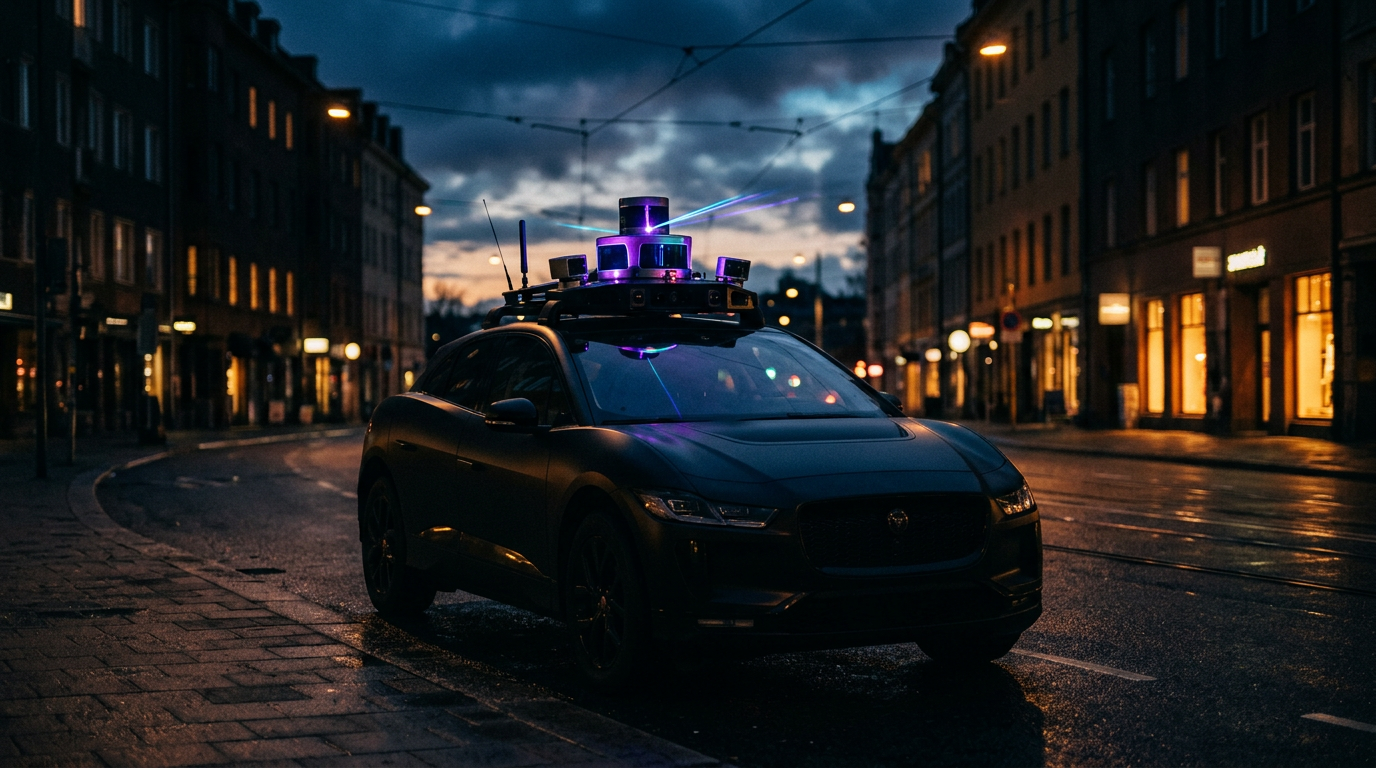
Minnesota Lawmakers Clash Over Waymo as Tesla Bets $1.3 Trillion Valuation on Robotaxis, Not Cars
Minnesota legislators are debating whether to greenlight Waymo's autonomous vehicles—or pump the brakes entirely—while Tesla's stock trades at a 300x P/E ratio betting its future on the same technology. The fight in St. Paul mirrors a global pivot: self-driving is no longer science fiction, it's a regulatory battleground.
The future of autonomous vehicles is being written in real time across two very different stages: the marble halls of the Minnesota State Capitol and the balance sheet of Tesla, Inc. And in both cases, the stakes are existential.
On Wednesday, Minnesota lawmakers convened to debate a bipartisan bill that would establish a regulatory framework for self-driving cars—including Waymo, Google's robotaxi service—and prohibit local governments from enacting their own rules. Waymo, already testing vehicles in Minneapolis with a safety driver, is pushing hard for the measure. "The legislation is a vital step towards getting autonomous vehicles and their proven safety, accessibility and economic benefits to Minnesota," said Adam Lane, Waymo's state and local policy manager, according to CBS Minnesota.
But the bill won't be fast-tracked. Democratic lawmakers, led by Rep. Samantha Sencer-Mura of Minneapolis, are demanding a pause. "Minnesotans deserve to know who is responsible when technology makes decisions on public roads," Sencer-Mura said at a Tuesday press conference alongside rideshare drivers. "Other states have moved quickly and are now dealing with challenges after deployment. We have a chance here in Minnesota to lead differently by studying first, listening to the public and setting clear guardrails before commercialization begins."
The tension in Minnesota is a microcosm of a broader industry reckoning. Autonomous vehicles are no longer a futuristic curiosity—they're a commercial reality demanding regulatory clarity. Waymo operates in 10 cities, mostly in the southern U.S. and California, and is expanding aggressively. Meanwhile, Tesla is betting its entire corporate identity on the same technology, even as its core business—selling electric cars—stumbles.
According to a March 5, 2026 analysis from Finterra, Tesla reported 2025 revenue of $94.8 billion, a 3% decline from 2024's $97.6 billion—the first revenue contraction in the company's public history. Total global vehicle deliveries fell 10% year-over-year to 1.64 million units. Automotive gross margins collapsed to roughly 16%, down from 25%+ in 2022, as Tesla engaged in a brutal global price war to defend market share during what the industry now calls the "EV Winter" of 2024-2025.
Yet Tesla's stock has surged 45% over the past year, and as of March 5, 2026, trades at approximately $406 per share—a market cap near $1.3 trillion and a forward price-to-earnings ratio exceeding 300x. Wall Street is no longer valuing Tesla as a car company. It's valuing it as an AI platform whose success depends on "the total mastery of autonomy," per Finterra.
The company's roadmap reflects this pivot. Volume production of the Cybercab—a steering-wheel-less autonomous vehicle designed for Tesla's robotaxi network—is slated for April 2026 at Giga Texas. The Optimus Gen 3 humanoid robot is now performing "useful work" in Tesla's own factories, and the company is converting its Fremont plant into a dedicated Optimus manufacturing hub. Tesla's energy storage business, featuring the Powerwall and Megapack, is surging with margins near 30%, "beginning to rival the automotive segment in terms of margin profile," according to Finterra.
Elon Musk, Tesla's CEO, has effectively declared the company's future lies in robotics and autonomy, not sedans. The rollout of Full Self-Driving (FSD) in Austin, Texas, as a commercial service marks the beginning of Tesla's attempt to monetize its software fleet at scale. But Tesla faces formidable competition: Waymo has a lead in geofenced commercial miles, while Zoox (owned by Amazon) is scaling in select markets. BYD officially surpassed Tesla as the world's largest battery-electric vehicle manufacturer in 2025, delivering 2.26 million units, per Finterra.
Back in Minnesota, the regulatory debate is intensifying precisely because the technology is advancing so quickly. Nancy Daubenberger, commissioner of the Minnesota Department of Transportation, told lawmakers that "fully automated vehicles will be a part of Minnesota's very near transportation future, and clear rules and regulations governing the operation of automated vehicles are needed," CBS Minnesota reported. Currently, Minnesota law neither prohibits nor explicitly allows automated vehicles to test on public roads—a legal gray zone that both Waymo and critics find untenable.
Disability advocates testified in favor of the bill, arguing that autonomous vehicles could dramatically expand transportation access. "The most cited concern among blind Minnesotans is access to transportation," said Corbb O'Connor, president of the National Federation of the Blind of Minnesota. "More than doctors' appointments and groceries, autonomous vehicles move us closer to a barrier-free avenue to employment, tourism and education."
But rideshare drivers are worried. Eid Ali, president of the Minnesota Uber/Lyft Drivers Association, urged lawmakers to include drivers and safety experts in the conversation. "We welcome innovations that strengthen our community and improve transportation. However, innovation must move forward responsibly," Ali said, according to CBS Minnesota.
The Minnesota debate is a preview of fights to come in statehouses nationwide. Autonomous vehicles promise profound benefits—safer roads, mobility for the disabled, reduced congestion—but they also threaten to displace millions of drivers and raise thorny questions about liability, data privacy, and algorithmic accountability. The technology is advancing faster than the regulatory infrastructure can keep pace.
Tesla's valuation suggests investors believe the company will win this race. But the Minnesota legislature's caution reflects a public that isn't ready to hand over the keys—literally or figuratively—without serious scrutiny. The question isn't whether autonomous vehicles will arrive. It's whether policymakers can write rules that protect workers, ensure safety, and hold companies accountable before the technology becomes too entrenched to regulate effectively.
Waymo has a head start in commercial deployment. Tesla has a massive real-world dataset from millions of customer vehicles. Both are betting billions that autonomy is the next platform shift. Minnesota lawmakers, meanwhile, are trying to figure out who's liable when a robotaxi runs a red light. The gap between those two realities is where the future of transportation will be decided—one committee hearing, one software update, and one regulatory framework at a time.