Iran Inks $584 Million Russian Missile Deal as Trump Threatens Military Action, Arms Embargo Crumbles
Tehran signed a half-billion-dollar contract for Russian anti-aircraft missiles and is negotiating Chinese anti-ship weapons, defying a UN arms embargo that Moscow and Beijing refuse to recognize. The deals follow Israel's devastating June strikes and come as the U.S. repositions carrier groups for potential action against Iran.
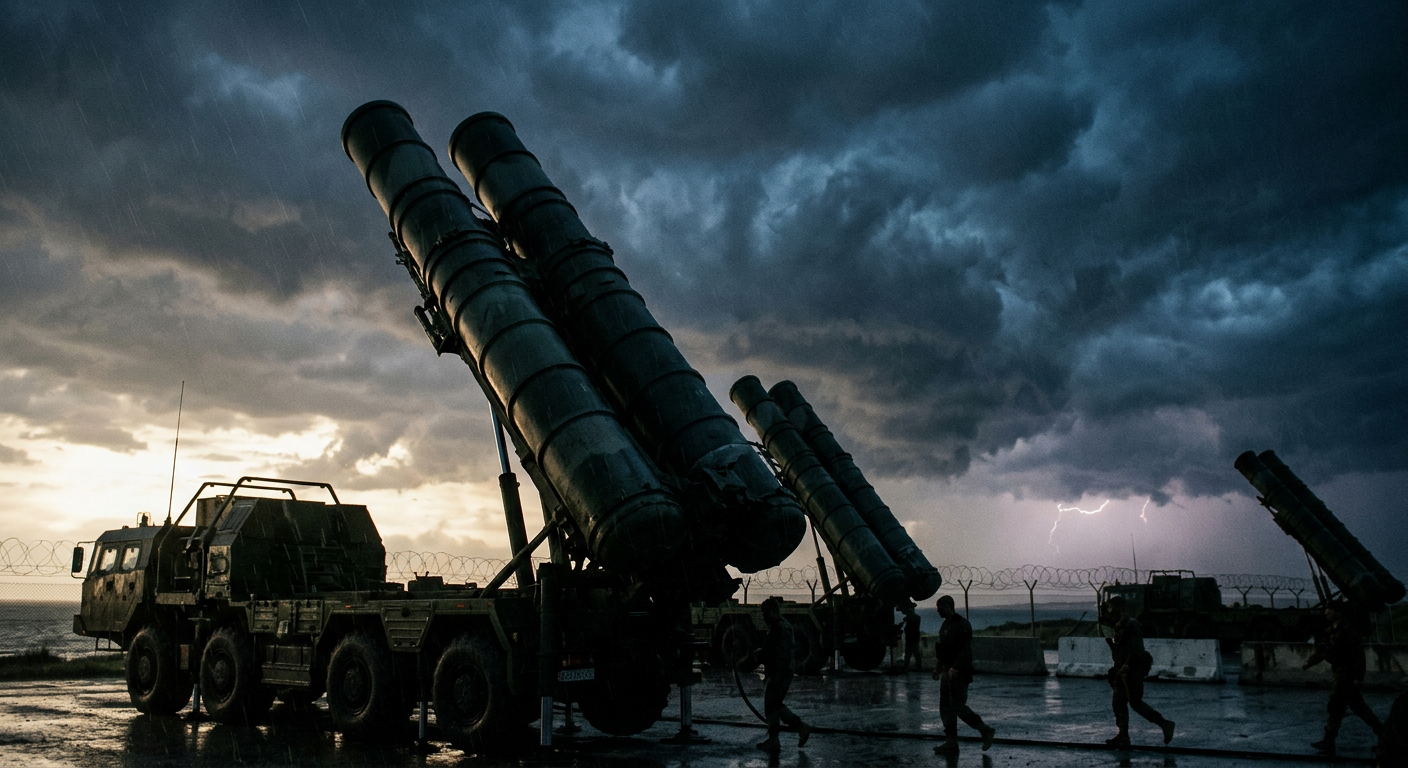
Iran has accelerated a military procurement spree with Russia and China worth hundreds of millions of dollars, defying a reinstated international arms embargo and exposing the collapse of Western leverage over Tehran's weapons programs. The shopping list includes advanced anti-aircraft systems to defend against Israeli airstrikes and supersonic anti-ship missiles capable of threatening U.S. warships in the Persian Gulf — all while President Trump positions American forces for potential military intervention.
According to the Financial Times, Iran signed a €495 million ($584 million) deal with Russia in December for 500 Verba shoulder-fired anti-aircraft launchers and 2,500 missiles, with deliveries scheduled across 2027-2029. Some units may have already arrived in Iran. The contract came just months after Israel's Operation Rising Lion in June 2025 — a two-week air campaign that struck Iranian military and nuclear sites following an IAEA declaration that Tehran had violated its nuclear commitments.
The Verba system, designed to target helicopters and drones at altitudes up to 4,500 meters and ranges of 6.5 kilometers, addresses a glaring vulnerability exposed during the conflict. Israel's air superiority during the 12-Day War left Iranian air defenses in tatters, and Tehran clearly concluded it needed Russian expertise to rebuild.
But the Russian deal is only part of the story. Reuters reported on February 24 that Iran is close to finalizing a separate agreement with China for CM-302 anti-ship missiles, the export version of Beijing's YJ-12. Negotiations intensified over the summer of 2025, though Reuters' sources cautioned that China could still walk away given the volatile regional climate and potential U.S. military action. The CM-302 travels at supersonic speed and can strike targets up to 290 kilometers away — a serious threat to commercial shipping and naval vessels in the congested Strait of Hormuz, through which roughly 20% of global oil passes.
What makes these deals remarkable is that they're happening in open defiance of a UN arms embargo. The original embargo, imposed to force Iran to the negotiating table over its nuclear program, was lifted in October 2023 as part of the 2015 nuclear accord's sunset provisions. But after the IAEA's June 2025 violation declaration and failed diplomatic efforts by France, Germany, and the United Kingdom — the so-called E3 — the embargo snapped back into effect in September under Resolution 2231.
Russia and China have simply refused to recognize it. "We do not recognize the snapback as coming into force," Russia's UN Ambassador Vassily Nebenzia told reporters. China's Foreign Ministry echoed the sentiment, stating it "firmly opposes unilateral and illegal restrictions." The message to Washington and Brussels is clear: the era of Western-enforced arms control over Iran is over.
The UK House of Commons Library noted in a research briefing that the Trump administration has not removed any of the main sanctions against Russia imposed under previous administrations, but it also conspicuously failed to join the UK and EU in imposing new sanctions throughout the first nine months of 2025. Trump has threatened "major sanctions on Russia" — but only, he said in September, when NATO members stop buying Russian oil. That conditionality suggests sanctions coordination among Western allies is fraying precisely when unity matters most.
Meanwhile, the UK and EU have continued tightening their own measures. According to the House of Commons briefing, the UK has sanctioned 3,280 individuals, entities, and ships under its Russia regime since 2022, while the EU has sanctioned over 2,700 individuals and entities plus 597 shadow fleet vessels. The EU presented a roadmap in May 2025 to end dependence on Russian energy entirely by the end of 2027. But these efforts look increasingly like unilateral Western actions rather than a coordinated global response — especially when Moscow and Beijing are openly arming Iran.
The geopolitical stakes have escalated sharply. Iran's domestic situation has deteriorated since massive protests erupted in late December and early January over economic collapse and the plummeting rial. After initially promising to listen "with patience," Iranian security forces launched a brutal crackdown culminating in massacres on January 8-9. Trump responded by urging Iranians to continue protesting, posting on Truth Social that "help is on its way."
That help now appears to be military. According to Defense Security Monitor, the U.S. has spent the past month repositioning combat aircraft, surveillance planes, and two carrier groups to the Middle East. The Pentagon's build-up is now "essentially complete," positioning American forces to conduct renewed airstrikes should diplomacy fail. China's hesitation over finalizing the CM-302 deal likely reflects awareness that Iran could soon be under attack — and Beijing has no interest in seeing its advanced missiles destroyed on Iranian soil before they're even operational.
The broader pattern is unmistakable: the architecture of international arms control, already weakened by great power competition, is collapsing in real time. The "Second Cold War" framing that scholars and journalists have debated for years — tensions between a Western bloc led by the U.S. and an Eastern axis of Russia, China, Iran, and North Korea — is no longer theoretical. It's playing out in weapons contracts, defied embargoes, and carrier group deployments.
What's striking is how little leverage the West retains. The UK government estimates that sanctions have denied Russia access to at least $450 billion since February 2022, including $285 billion in immobilized Central Bank reserves. The UK alone has frozen £28.7 billion in Russia-linked assets as of May 2025, according to the Office for Financial Sanctions Implementation. Yet Russia is signing half-billion-dollar arms deals with Iran and China is negotiating to sell supersonic missiles to a country the U.S. may bomb within weeks.
The failure isn't just about enforcement — it's about the fracturing of the global order that made arms embargoes enforceable in the first place. When Moscow and Beijing openly reject UN resolutions and Trump conditions sanctions relief on NATO energy purchases, the message to Tehran is that the rules-based system is dead. Iran can rebuild its military with Russian and Chinese hardware, and the only recourse left to Washington is kinetic: airstrikes, blockades, and the risk of a wider regional war.
The irony is that this was predictable. George Kennan, the architect of Cold War containment, warned in 1998 that NATO expansion would be "the beginning of a new cold war" and that "the Russians will gradually react quite adversely." A quarter-century later, Russia is arming Iran with advanced missiles, China is negotiating anti-ship weapons sales, and the U.S. is massing forces for potential strikes. The new Cold War isn't coming — it's here, and the Middle East is its most volatile flashpoint.