Iran's Foreign Minister Rejects Ceasefire as U.S. Sinks Warship, Oil Surges 20% in Six Days
Foreign Minister Abbas Araghchi told NBC News that Tehran has not requested a halt to hostilities and is 'waiting' for a possible U.S. ground invasion. The defiant stance comes as U.S. crude oil hit $82 per barrel — its highest level since July 2024 — and Congress rejected measures to restrict Trump's war powers.
Iran's foreign minister delivered a blunt message to Washington on Thursday: Tehran has not asked for a ceasefire, is prepared for a U.S. ground invasion, and sees no reason to negotiate with an administration it considers dishonest. The remarks from Abbas Araghchi, made in a video interview with NBC Nightly News anchor Tom Llamas, came as the six-day-old conflict escalated across the Middle East and global oil markets surged to their highest levels in eight months.
'No, we are waiting for them,' Araghchi said when asked if he feared a possible U.S. ground invasion, according to NBC News. 'Because we are confident that we can confront them, and that would be a big disaster for them.' The defiant tone marked a sharp rejection of any diplomatic off-ramp as American and Israeli forces continue to pummel Iranian military infrastructure and Tehran fires back with expanding drone attacks that have hit targets across the region.
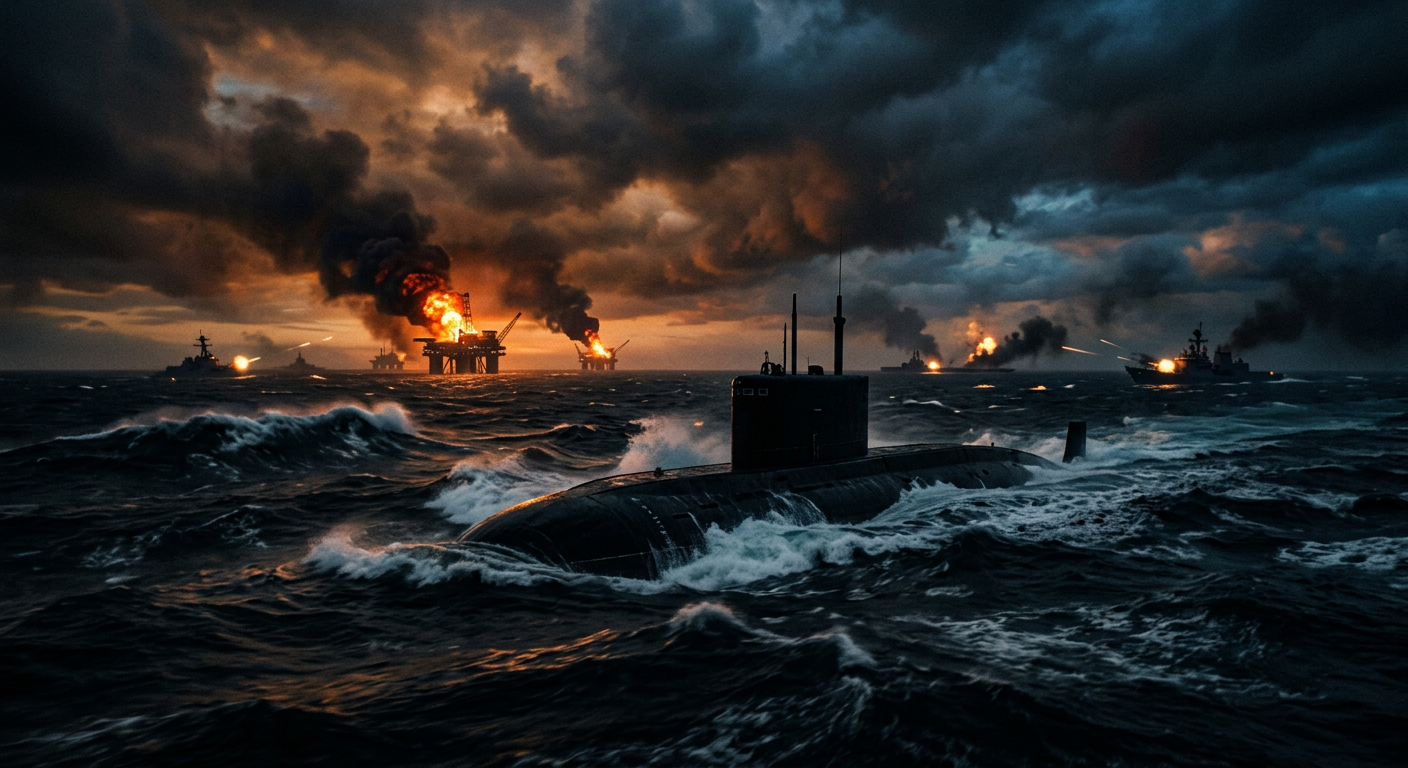
The interview followed a dramatic escalation at sea: on Wednesday, a U.S. submarine torpedoed the Iranian frigate IRIS Dena in the Indian Ocean off Sri Lanka, killing at least 87 people. It was the first time since World War II that a torpedo launched from a U.S. Navy submarine had struck a vessel in combat. Australia's prime minister confirmed that three Australian personnel were aboard the American submarine as part of training for the trilateral AUKUS security agreement, though he insisted they 'participated in no offensive action against Iran,' according to NBC News.
The naval strike drew a furious response from Tehran, which warned that the U.S. would 'bitterly regret' the attack. Iran's government noted that the Dena had been returning from naval exercises hosted by India — a pointed reminder that the vessel was struck after participating in activities with a major U.S. partner. The incident has created an awkward diplomatic situation for New Delhi, which has sought to maintain ties with both Washington and Tehran.
Financial markets are now pricing in a protracted conflict. U.S. crude oil shot up more than 8% on Thursday, briefly touching $82 per barrel — a 20% surge since Sunday and the highest level since July 2024, according to NBC News. The international oil benchmark also rose 4%. U.S. stocks resumed their sell-off, with the Dow Jones Industrial Average plunging more than 1,000 points at one point before closing down 785 points, or 1.6%. The S&P 500 fell 0.6% and the Nasdaq dropped 0.3%.
Energy stocks were the best performers in the S&P 500, benefiting from the oil price surge, while consumer staples, materials, and industrials took the heaviest losses. The market turbulence reflects growing investor concern that the conflict could disrupt Middle Eastern oil supplies or spread to major producers like Saudi Arabia, which has already intercepted Iranian ballistic missiles, according to the Financial Times.
In Washington, congressional efforts to rein in President Donald Trump's military campaign collapsed. The Senate blocked a war powers resolution that would have restricted Trump's ability to carry out further military action against Iran, voting 47-53 along largely party lines, NBC News reported. The House rejected a similar measure 212-219, with just two Republicans breaking with Trump. House Speaker Mike Johnson insisted after the vote that the U.S. is 'not at war' and has 'no intention of being at war,' calling the operations a 'limited' mission that is 'nearly accomplished by all estimates' but 'needs to continue.'
That assessment is difficult to square with the expanding scope of hostilities. U.S. Central Command released video on Thursday showing a strike on an Iranian drone carrier roughly the size of a World War II aircraft carrier. 'U.S. forces aren't holding back on the mission to sink the entire Iranian Navy,' CENTCOM declared on X. Israel launched what it called a 'broad-scale wave of strikes' on Tehran, targeting infrastructure of what the Israeli military described as the 'Iranian terror regime.' The Israeli Air Force also conducted 26 strikes in Lebanon, hitting Hezbollah positions in Dahiyeh, a southern suburb of Beirut.
The human toll is mounting rapidly. More than 940 people have been killed by Israeli and American strikes, Iranian state media reported, while 11 have died in Israel as Iran fired back. Six U.S. service members have been killed, all assigned to the 103rd Sustainment Command in Des Moines, Iowa. Defense Secretary Pete Hegseth honored the six soldiers who 'gave everything for their country and this mission,' and a dignified transfer is scheduled for Saturday at Dover Air Force Base in Delaware. In Lebanon, Israeli strikes have killed 77 people, according to NBC News.
The conflict has also created a humanitarian crisis, with thousands of Americans stranded in the Middle East amid travel chaos. The State Department said a charter flight was returning Americans home, but the Trump administration has faced sharp criticism for failing to plan adequate evacuations. Qatar has intercepted multiple drone attacks targeting Al-Udeid Air Base, a major U.S. military installation, and Azerbaijan reported being struck by an Iranian drone, according to the Financial Times.
Araghchi's rejection of negotiations represents a dramatic reversal from just days earlier, when he had been engaged in talks in Geneva with Trump envoy Steve Witkoff and Trump's son-in-law Jared Kushner over a potential diplomatic arrangement. Those discussions collapsed when U.S. and Israeli strikes began. 'We don't have any positive experience of negotiating with the United States, especially with this administration,' Araghchi told NBC News. 'We negotiated twice last year and this year, and then in the middle of negotiations, they attacked us. So we see no reason why we should engage once again with those who are not honest in negotiation.'
The Iranian foreign minister also addressed a controversial incident in which an elementary school in Minab was struck, reportedly killing dozens of schoolgirls. The U.S. military has said the incident is under investigation and raised the possibility that an errant Iranian munition was responsible. Araghchi rejected that suggestion, saying Iranian authorities believed the strike was carried out by U.S. or Israeli forces. 'According to him, 171 schoolgirls were killed in the attack,' the Times of India reported. 'This is what our military said. So it is either US or Israel. What is the difference?' Araghchi said.
The death of Ayatollah Ali Khamenei in a U.S.-Israeli strike has created a power vacuum in Iran for the first time in decades. As ruling clerics select a new supreme leader, the real power now likely rests with the Islamic Revolutionary Guard Corps, the heavily armed force that propped up Khamenei for decades, according to NBC News. That shift could make the conflict even more difficult to resolve, as the IRGC has historically taken a harder line than Iran's civilian government.
Araghchi offered a bleak assessment of the conflict's trajectory. 'There is no winner in this war,' he said. 'Our win is to be able to resist against the illegal goals, and this is what we have done so far.' That framing — casting mere survival as victory — suggests Tehran is bracing for a prolonged war of attrition. With oil prices climbing, markets sliding, and both sides rejecting diplomacy, the Middle East appears headed for a conflict with no clear end in sight and mounting costs for the global economy.