McDonald's CEO Mocked for 'Hesitant' Burger Bite as Burger King President Fires Back with Whopper Video
Chris Kempczinski's timid taste-test of McDonald's new Big Arch sparked viral ridicule, prompting Burger King President Tom Curtis to post a video taking an exaggerated bite of a Whopper. The exchange reignites the fast-food giants' decades-long rivalry, now playing out as performative theater on social media.
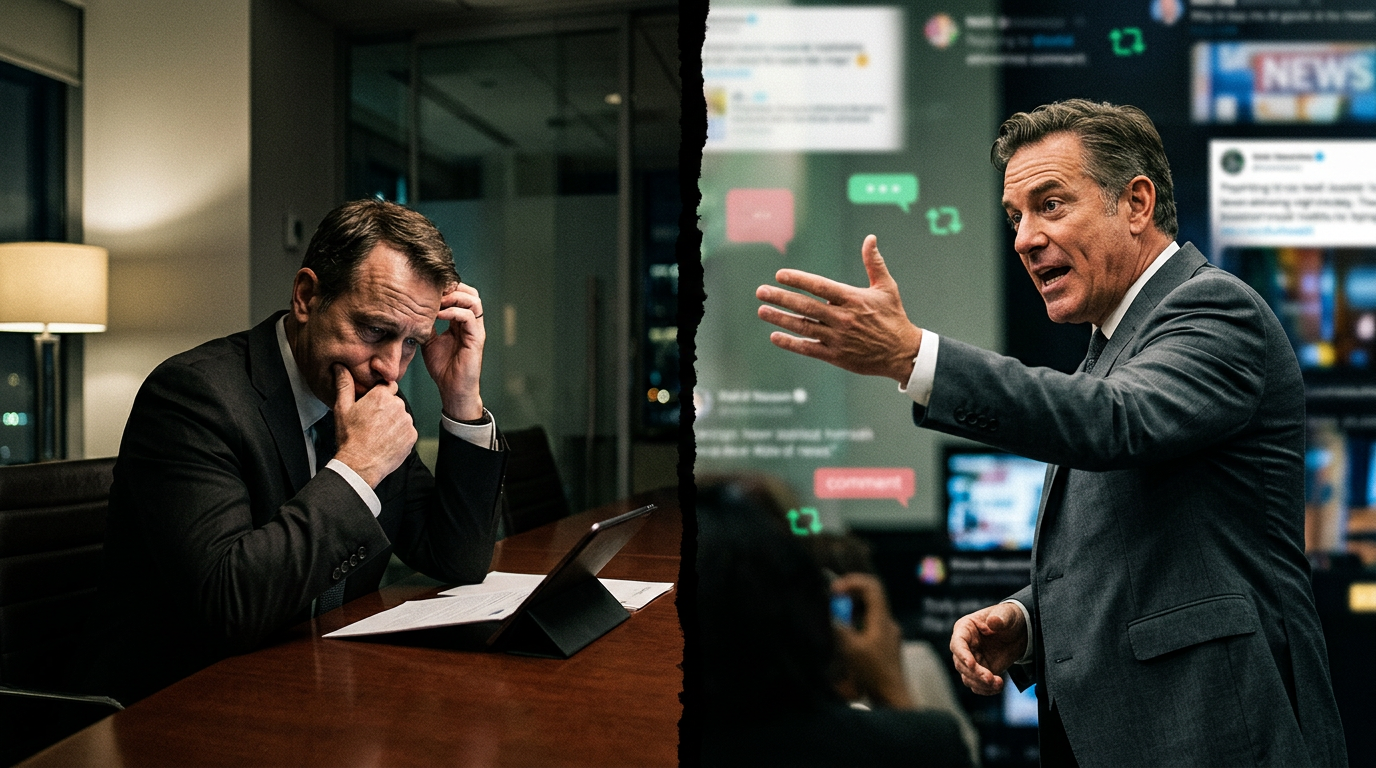
The fast-food wars have devolved into something stranger than anyone could have predicted: a viral video battle over who can take a more convincing bite of a hamburger. McDonald's CEO Chris Kempczinski found himself at the center of internet mockery this week after a promotional video showed him taking what social media users described as a "hesitant" and "small" bite of the chain's new Big Arch burger. Burger King's response was swift and theatrical — President Tom Curtis posted his own video, mouth agape, chomping into a Whopper with the kind of enthusiasm typically reserved for competitive eating contests.
According to Latestly, the "burger war" between the two chains has officially moved to social media, with the exchange highlighting "a long history" of Burger King trolling its larger rival. What makes this moment particularly absurd is that we're watching two grown men who run multi-billion-dollar corporations engage in what amounts to a playground dare. Kempczinski's original video, apparently intended to promote the Big Arch, instead became a Rorschach test for corporate authenticity. Was he genuinely unenthusiastic about his own product? Was he worried about getting sauce on his suit? Or was this simply the awkwardness of a CEO trying to look relatable on camera?
Curtis seized the opening with the instinct of a social media manager half his age. His Whopper bite wasn't just big — it was performative, a deliberate contrast designed to make Kempczinski look timid by comparison. The subtext was clear: our burgers are so good, we actually want to eat them. The move fits perfectly into Burger King's established playbook of needling McDonald's, a strategy that's produced memorable campaigns like "Whopper Detour," which offered customers one-cent Whoppers if they ordered through the BK app while standing near a McDonald's location.
What's fascinating here isn't just the pettiness — though there's plenty of that — but what it reveals about how corporate rivalry functions in 2026. Traditional advertising still exists, but the real battleground is viral moments and meme-ability. A CEO's body language while eating a burger can generate more engagement than a Super Bowl ad, and companies are learning to weaponize that attention. Burger King has long understood this dynamic better than McDonald's, positioning itself as the scrappy underdog willing to throw punches, even when those punches are literally about sandwich consumption technique.
The incident also underscores a broader shift in how we evaluate corporate leadership. CEOs are no longer just expected to deliver quarterly earnings and strategic vision — they're expected to be content creators, brand ambassadors who can authentically embody their products on camera. Kempczinski's awkward bite became a problem not because the Big Arch is necessarily bad, but because it suggested a disconnect between the executive suite and the product. In an era when consumers are increasingly skeptical of corporate messaging, that kind of inauthenticity gets punished instantly and publicly.
McDonald's, for its part, hasn't issued a response to Curtis's video, which is probably the right move. Engaging further would only extend the news cycle and give Burger King exactly what it wants: more attention. But the silence also feels like a missed opportunity. The best response to being mocked for taking a small bite would be to lean into the absurdity, not retreat from it. Instead, McDonald's is left looking like the humorless giant that can't take a joke, while Burger King gets to play the fun, irreverent challenger.
This isn't the first time fast-food executives have found themselves in viral moments, and it won't be the last. But the Kempczinski-Curtis exchange feels like a turning point, a moment when the performance of corporate leadership became as important as the substance. We're not just buying burgers anymore — we're buying the theater of burger consumption, the narrative of which CEO looks more genuine while promoting their product. It's marketing as reality TV, and the audience is eating it up, even if Kempczinski barely touched his burger.
The Big Arch will likely sell just fine, and Burger King's Whopper sales probably won't see a measurable bump from Curtis's video. But in the attention economy, none of that matters as much as the memes. Kempczinski learned an expensive lesson: in 2026, how you eat a burger can matter more than how it tastes. And Burger King, ever the opportunist, proved once again that when your competitor stumbles, the best move is to take the biggest bite possible — and make sure everyone's watching.