Avatar: Fire and Ash Crosses $1.48 Billion as Hollywood's Franchise Era Reaches Peak Saturation
James Cameron's third Avatar installment has earned nearly $1.5 billion globally while still in theaters, cementing Disney's dominance in a 2026 release calendar so crowded with sequels and reboots that original storytelling has become a commercial liability.
James Cameron's Avatar: Fire and Ash has grossed $1.48 billion worldwide and is still playing in theaters as of early March 2026, according to Wikipedia's box-office tracking. The film ranks 16th on the all-time highest-grossing films list — a respectable showing for a franchise whose first two installments occupy the number one and three spots globally, with Avatar (2009) holding the all-time record at $2.92 billion and The Way of Water (2022) at $2.33 billion.
But Fire and Ash's performance, while commercially robust, arrives at a moment when Hollywood's creative exhaustion has never been more visible. The 2026 television premiere calendar, compiled by The Hollywood Reporter and TVLine, reads like a greatest-hits compilation of intellectual property recycling: Daredevil: Born Again (Disney+), The Boys final season (Prime Video), Euphoria season three (HBO), Stranger Things: Tales From '85 (Netflix), and a Malcolm in the Middle revival titled Life's Still Unfair.
Original programming has been relegated to the margins. Apple TV+ is premiering Widow's Bay, Maximum Pleasure Guaranteed, and Lucky — titles so generic they could have been generated by an algorithm. Prime Video offers Off Campus and The House of the Spirits. Netflix counters with Homicide New York and Something Very Bad Is Going to Happen, the latter a title that unintentionally captures the industry's creative crisis.
The franchise dominance extends beyond streaming. CBS is launching Marshals, a spinoff featuring Luke Grimes reprising his Yellowstone role as Kayce Dutton, now working for the U.S. Marshals. The network is also debuting CIA, an expansion of Dick Wolf's FBI universe starring Tom Ellis and Nick Gehlfuss. Fox has greenlit Best Medicine, an American adaptation of the British series Doc Martin starring Josh Charles, and The Faithful: Women of the Bible. Even PBS is getting in on the act with The Forsytes and The Count of Monte Cristo.
Reality television offers no respite from the sequel epidemic. Bravo is launching Ladies of London: The New Reign and The Real Housewives of Rhode Island, expanding a franchise that has already colonized Atlanta, Beverly Hills, New York, and a dozen other markets. A&E is reviving Duck Dynasty with Duck Dynasty: The Revival. MTV is airing the final season of Jersey Shore Family Vacation. Even The Bachelorette is back, with Taylor Frankie Paul as the lead, according to The Hollywood Reporter.
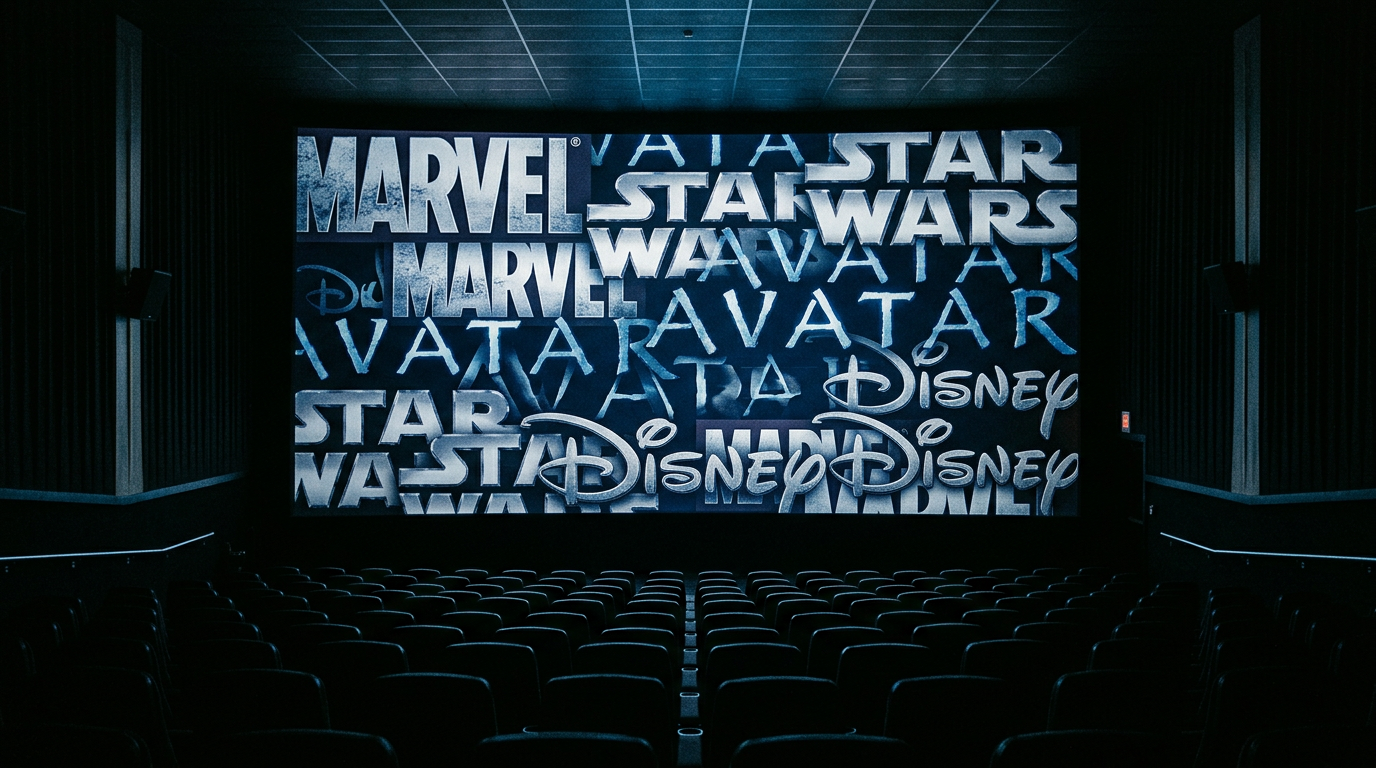
The most revealing detail in the 2026 calendar may be the Hannah Montana 20th Anniversary Special on Disney+. The show premiered in 2006, making this a 20-year nostalgia play for a generation that grew up with Miley Cyrus. Disney is betting that millennials with disposable income will subscribe to relive their childhoods — a strategy that has worked brilliantly for the company's Marvel and Star Wars franchises but raises uncomfortable questions about whether Hollywood is still capable of creating new cultural touchstones.
The box-office data supports the franchise thesis. Of the top 18 highest-grossing films of all time, according to Wikipedia, only Avatar and Titanic are original properties. The rest are sequels (Avengers: Endgame, Avatar: The Way of Water, Avengers: Infinity War, Furious 7, Frozen 2), franchise installments (Star Wars: The Force Awakens, Spider-Man: No Way Home, Jurassic World, Top Gun: Maverick), or remakes (The Lion King 2019). The animated sequel Ne Zha 2 from China has earned $2.22 billion, making it the highest-grossing animated film ever and the fifth highest-grossing film of all time.
The economic logic is irrefutable. The Lion King (1994) earned over $2 billion in box-office and home video sales, according to Wikipedia, but its stage adaptation has generated $8 billion globally. Pixar's Cars, a modest theatrical performer at $462 million, produced $8 billion in merchandise sales in its first five years. Toy Story 3 earned $1 billion at the box office and nearly $10 billion in merchandise. When ancillary revenues — home video, television rights, merchandising, theme park attractions — can dwarf theatrical income, the financial incentive to greenlight original projects evaporates.
Yet the cultural cost of this strategy is becoming harder to ignore. The 2026 calendar offers a few glimmers of ambition: HBO's DTF St. Louis with Jason Bateman, David Harbour, and Linda Cardellini exploring a middle-age love triangle; FX's The Beauty, a Ryan Murphy thriller about a deadly virus promising physical perfection; Prime Video's The Gray House, a limited series about four women running a Civil War espionage network. But these projects are swimming against a tide of reboots, revivals, and franchise extensions.
The streaming wars have accelerated the IP arms race. Netflix is premiering One Piece, Beef season two, and Dynasty: The Murdochs. Apple TV+ has For All Mankind, Criminal Record, and Your Friends Neighbors. Prime Video is launching Young Sherlock, Jury Duty Presents: Company Retreat, and Star Wars: Maul — Shadow Lord on Disney+. Paramount+ is debuting Star Trek: Starfleet Academy with Holly Hunter and The Madison. Peacock has Ted, The Miniature Wife, and The 'Burbs with Keke Palmer and Jack Whitehall.
The television calendar also reveals Hollywood's desperate attempt to monetize every conceivable niche. HGTV is airing Bachelor Mansion Takeover. Food Network has Flavortown Food Fight and The Ultimate Baking Championship. TLC is premiering One Day in My Body. Freeform has The Thrifting Show With Lara Spencer. TBS is launching Foul Play With Anthony Davis. The CW is airing The Great American Road Rally: Celebrity Edition.
Even prestige television is leaning on established IP. HBO is premiering A Knight of the Seven Kingdoms, set a century before Game of Thrones, and Rooster, a new series from an undisclosed creator. Starz is airing the final season of Outlander and Power Book III: Raising Kanan. MGM+ has Spider-Noir, a spinoff starring Nicolas Cage. AMC is debuting The Audacity.
The most striking aspect of the 2026 landscape is not the absence of original ideas — they exist, scattered throughout the calendar like rare artifacts — but the economic and cultural consensus that original ideas are too risky to prioritize. When Avatar: Fire and Ash can earn nearly $1.5 billion by delivering more of what audiences have already seen twice before, the business case for innovation collapses. James Cameron, to his credit, has built a franchise on technological spectacle and environmental themes, but even his vision is now locked into a five-film cycle that will extend into the 2030s.
The 2026 calendar suggests Hollywood has made its choice: comfort over creativity, nostalgia over novelty, brands over breakthroughs. The question is whether audiences will eventually tire of being sold their own childhoods back to them, or whether the franchise era represents a permanent shift in how stories are told and consumed. For now, the box office and streaming numbers suggest the latter. Avatar: Fire and Ash is still playing in theaters, still earning millions, still proving that the safest bet in entertainment is the one audiences have already made before.