Disney Bets $1.86 Billion on 'Zootopia 2' as Streaming Wars Push Hollywood Back to the Theater
As Zootopia 2 races past $1.85 billion globally and Avatar: Fire and Ash crosses $1.48 billion, Disney's theatrical gamble is paying off—while rivals like Paramount scramble for mega-mergers and Netflix doubles down on reality TV. The message is clear: in 2026, the box office still crowns kings.
Disney is having the kind of year that makes its competitors weep into their quarterly earnings reports. Zootopia 2 has crossed $1.86 billion worldwide and is still playing in theaters, according to Wikipedia's real-time box office tracking, making it the ninth highest-grossing film of all time. Meanwhile, Avatar: Fire and Ash—James Cameron's latest voyage to Pandora—has pulled in $1.48 billion since its release and sits at number 16 on the all-time list. For a studio that spent the last few years being lectured about the death of theatrical exhibition, this is a hell of a victory lap.
The numbers tell a story Hollywood has been reluctant to admit: people will still show up to theaters if you give them something worth seeing. Zootopia 2 didn't just succeed—it became a cultural event, the kind of film that parents, kids, and nostalgic millennials all lined up for. And Cameron, who has now directed three of the four highest-grossing films ever (the original Avatar, Titanic, and now Fire and Ash), continues to prove that spectacle, when done right, is critic-proof and recession-proof.
But while Disney mints money at the multiplex, the rest of the industry is in full-blown identity crisis mode. Paramount just made a desperate $110 billion bid for Warner Bros. Discovery, according to Deadline, in a last-gasp attempt to achieve the scale that supposedly matters in the streaming age. The logic? Bigger is better. More content, more leverage, more... something. Except no one seems entirely sure what that something is, beyond vague promises about "empowering creatives" and "super-serving audiences."
The real commonality linking these mega-mergers, Deadline notes, is artificial intelligence. AI is being pitched as the magic sauce that will unlock value in these bloated media conglomerates—optimizing content libraries, personalizing recommendations, maybe even writing scripts if you squint hard enough at the press releases. It's a seductive pitch: technology will solve the problem of too much content chasing too few eyeballs. But it also feels like a distraction from the uncomfortable truth that Hollywood has forgotten how to make things people actually want to watch.
Meanwhile, the streaming landscape is a war of attrition disguised as innovation. Netflix is leaning hard into reality TV, with Love Is Blind Season 10 wrapping up and the reunion special set for March 11, according to Deadline. The streamer also announced Age of Attraction, another dating show, because apparently the appetite for watching strangers make terrible romantic decisions is bottomless. To be fair, reality TV is cheap to produce and generates steady engagement—a smart play when you're trying to justify subscription fees. But it's also a far cry from the prestige drama ambitions Netflix once had.
Disney, by contrast, is playing a different game entirely. The studio is offering a steep promotional discount on its Disney+/Hulu bundle—$4.99 a month for three months, 62% off the regular $12.99 price—according to Deadline. It's a transparent bid to juice subscriber numbers ahead of the next earnings call, but it also underscores how streaming has become a race to the bottom on pricing. When your content is commodified and your competitors are giving it away, how do you maintain value?
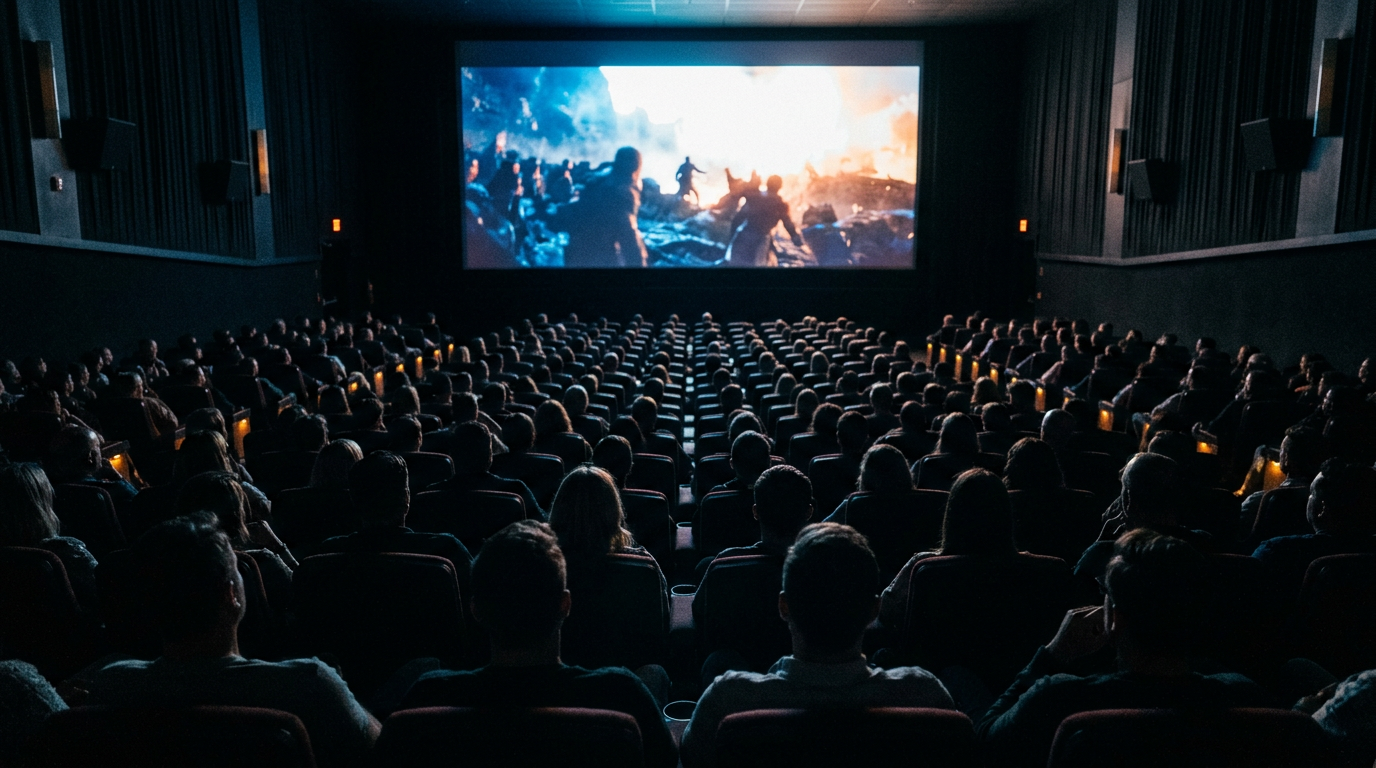
The answer, increasingly, is that you don't. You pivot back to what actually works: theatrical releases that people will pay $15-$20 to see, that generate word-of-mouth, that become part of the cultural conversation. Zootopia 2 and Avatar: Fire and Ash aren't just box office hits—they're proof that the theatrical experience still has a gravitational pull that streaming can't replicate. You can't manufacture the collective thrill of opening weekend by dumping a movie onto a platform at 3 a.m. on a Tuesday.
This is why Disney's 2026 slate, as detailed by Rotten Tomatoes, reads like a masterclass in franchise management. Daredevil: Born Again Season 2 hits Disney+ on March 24, bringing back Charlie Cox and Jon Bernthal. Elle, a Legally Blonde prequel series, drops on Prime Video on July 1 and has already been renewed for a second season—a bold move that signals Amazon's confidence in the IP. Netflix's Beef returns April 16 with Oscar Isaac, Carey Mulligan, and an entirely new cast, proving that anthology series can sustain momentum if the storytelling is sharp enough.
But the real action is still in theaters. One Piece Season 2 launches on Netflix March 10, Stranger Things: Tales From '85 arrives April 23, and Spider-Noir hits Prime Video May 27. These are big swings, expensive bets on intellectual property that has already proven its worth. And they're all jockeying for attention in an increasingly crowded marketplace where the average consumer has decision fatigue and a dozen subscriptions they barely use.
The irony is that while Paramount and Warner Bros. Discovery are merging in hopes of becoming too big to fail, Disney is quietly demonstrating that quality still beats quantity. Zootopia 2 didn't need a $110 billion corporate marriage to succeed. It needed a good story, stunning animation, and a release strategy that treated theaters as the main event, not an afterthought. Cameron's Avatar films—which have collectively grossed over $7 billion worldwide—didn't need AI optimization. They needed a director who understands spectacle and a studio willing to let him take his time.
This is the lesson Hollywood keeps refusing to learn: people don't want more content. They want better content. They want films and shows that justify the time and money required to engage with them. Streaming was supposed to democratize entertainment, but instead it's drowning audiences in mediocrity. The algorithm can't save you if what you're recommending is garbage.
So where does this leave us? Disney is riding high, but the competition is circling. Paramount's gambit with Warner Bros. Discovery could reshape the industry—or collapse under its own weight. Netflix is printing money with reality TV but risks becoming a punchline. And somewhere in the middle, audiences are voting with their wallets, choosing theatrical spectacle over streaming convenience when the stakes are high enough.
The box office in 2026 isn't dead. It's just more selective. And if you're Disney, with Zootopia 2 still raking in millions and Cameron's latest epic proving that Pandora never gets old, that selectivity is working in your favor. For everyone else, it's time to stop talking about scale and start talking about substance. Because the audience—bless them—can still tell the difference.