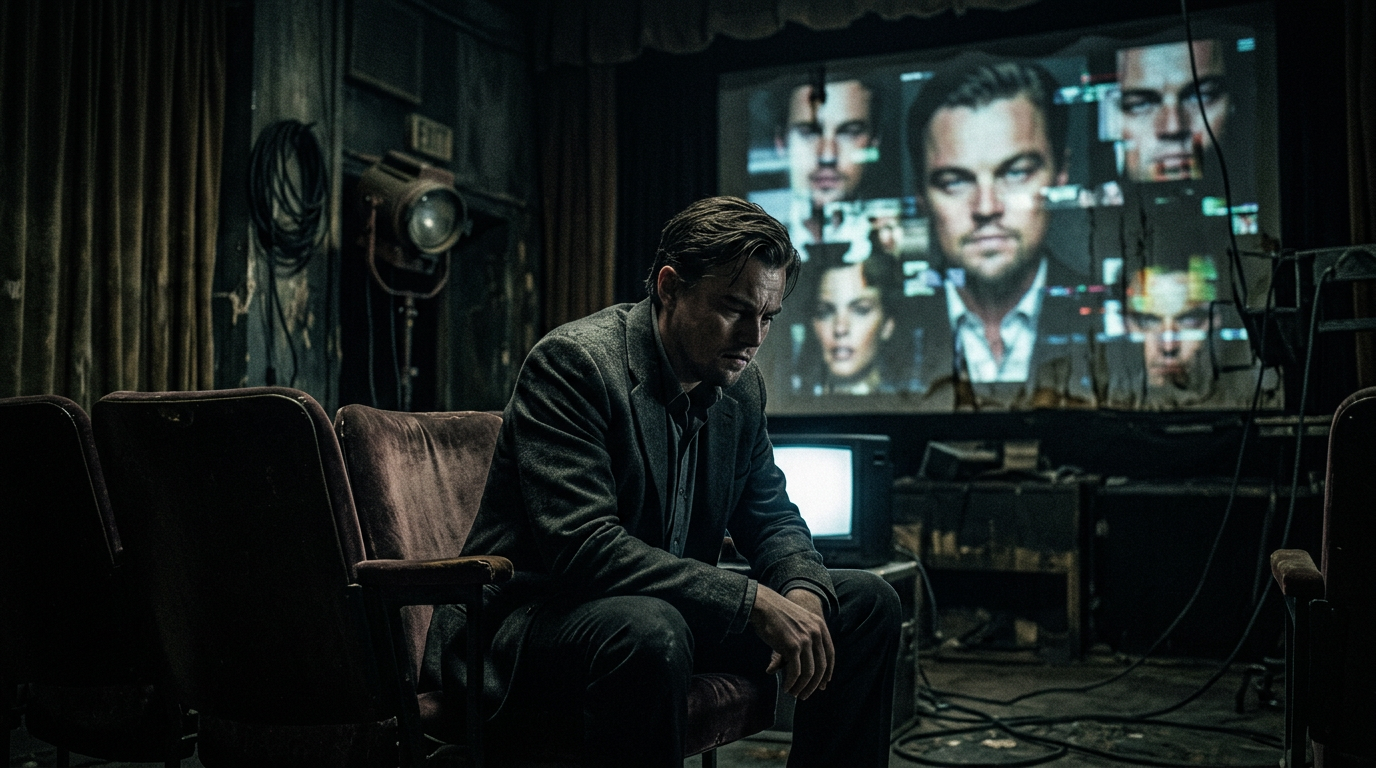
The Tillyverse Is Here: Hollywood's Uncanny Valley Just Got a Lot More Crowded
An AI actor named Tilly Norwood is building her own cinematic universe while real actors fight for residuals. Welcome to the entertainment industry's most uncomfortable inflection point—where the robots aren't just coming for jobs, they're getting franchises.
There's a peculiar irony in scrolling through this week's culture headlines. Sandwiched between stories about a Tourette's activist's BAFTA moment and Lisa Rinna's harrowing drugging incident sits a development that should unsettle anyone who cares about the future of storytelling: Tilly Norwood, a fully AI "actor," is launching something called the "Tillyverse"—an expanding fictional universe built around a performer who doesn't breathe, doesn't eat, and most importantly, doesn't need health insurance or residuals.
Let's be clear about what's happening here. This isn't some experimental art project or a one-off gimmick. The language matters: "rapidly expanding." Someone is betting real money that audiences will accept—perhaps even prefer—synthetic performers who can work 24/7, never age inconveniently, never demand creative input, and never, ever complain about working conditions. It's the logical endpoint of an industry that has spent decades trying to minimize the inconvenient humanity of the people who make its products valuable.
The timing is almost comically grim. While Hollywood's actual humans navigate an increasingly precarious landscape—where even a $34.8 million opening for "Wuthering Heights" feels like a victory worth celebrating, where streaming residuals remain a joke, where a landmark trial over social media's impact on mental health reminds us that tech companies have already proven adept at treating human psychology as an exploitable resource—we're supposed to get excited about digital puppets with their own cinematic universes. The same week we learn that tech companies are "making their robots cute to try to win over humans," we're watching the entertainment industry enthusiastically collaborate in its own replacement.
What makes the Tillyverse particularly insidious is how it masquerades as innovation while actually representing a profound creative regression. The entire appeal of performance—the thing that makes us return to certain actors, that creates genuine cultural moments—is the irreducible spark of human interpretation. When Catherine O'Hara wins a posthumous SAG-AFTRA Actor Award, it's not just about technical craft; it's about decades of accumulated humanity informing every choice. When Ariana DeBose talks about her friendship with Jamie Lee Curtis, we're watching the social fabric of an artistic community that exists beyond the screen. This matters. It's not romantic nostalgia—it's the actual substrate of storytelling.
An AI actor doesn't interpret a role; it generates outputs based on training data scraped from the performances of actual humans who developed their craft over lifetimes. It's cultural strip-mining dressed up as progress. And calling it the "Tillyverse" is a particularly cynical touch—appropriating the franchise-building language that has already reduced much of Hollywood to intellectual property management, but applying it to something that isn't even property in any meaningful sense. It's code. It's a very expensive, very sophisticated autocomplete function.
The broader context makes this moment even more troubling. We're watching the Warner Bros. Discovery-Paramount merger proceed while Democratic lawmakers question what Trump officials said to Netflix about the deal—a reminder that media consolidation continues apace, concentrating power in fewer hands even as the creative workforce becomes more precarious. We're seeing the first person take big tech to trial over social media's addictive designs while those same tech companies push deeper into entertainment with AI tools that promise to make human creators increasingly optional. The pattern is consistent: technology companies entering creative industries, claiming to democratize while actually centralizing control, promising efficiency while degrading the work itself.
There's also something revealing about the other culture stories competing for attention this week. JFK Jr. and Carolyn Bessette's dramatized story "renews fascination" with the couple—because we're still hungry for real human stories, for the messy complexity of actual lives. A monkey named Punch becomes an internet sensation not because of algorithmic optimization but because his story of social rejection and eventual acceptance mirrors something we recognize. These stories resonate because they're about beings with inner lives, with stakes, with the possibility of genuine surprise.
The Tillyverse offers none of that. It offers the appearance of narrative without the substance, the simulation of performance without the risk. And the fact that it's being marketed as an expansion—a universe, no less—suggests that someone believes audiences won't notice or won't care about the difference. They might be right. We've already accepted CGI de-aging, digital resurrection of dead actors, and entirely synthetic background characters. Each compromise seemed minor in isolation. But they add up to a fundamental question about what we value in storytelling and whether we're willing to preserve space for human creativity in an industry increasingly optimized for everything but.
What happens next isn't mysterious. If the Tillyverse proves commercially viable, every studio will want their own synthetic stable. The economics are too compelling: no scheduling conflicts, no salary negotiations, no messy personal lives to manage. We'll get more content—that's certain. Whether we'll get more art is a different question entirely. And by the time we realize what we've traded away, the infrastructure will be too entrenched to reverse. The robots won't have stolen our jobs; we'll have handed them over, one "innovative" project at a time, mistaking the elimination of human friction for progress.