West Sacramento's 455-Unit Apartment Project Scrapped as Commercial Real Estate Faces Mounting Pressure
An 8.16-acre West Sacramento site once planned for 455 apartments has quietly hit the market for sale, a stark sign that developers are retreating from residential projects as commercial property values continue their downward spiral. The about-face reflects broader headwinds hammering real estate markets from California to Macau.
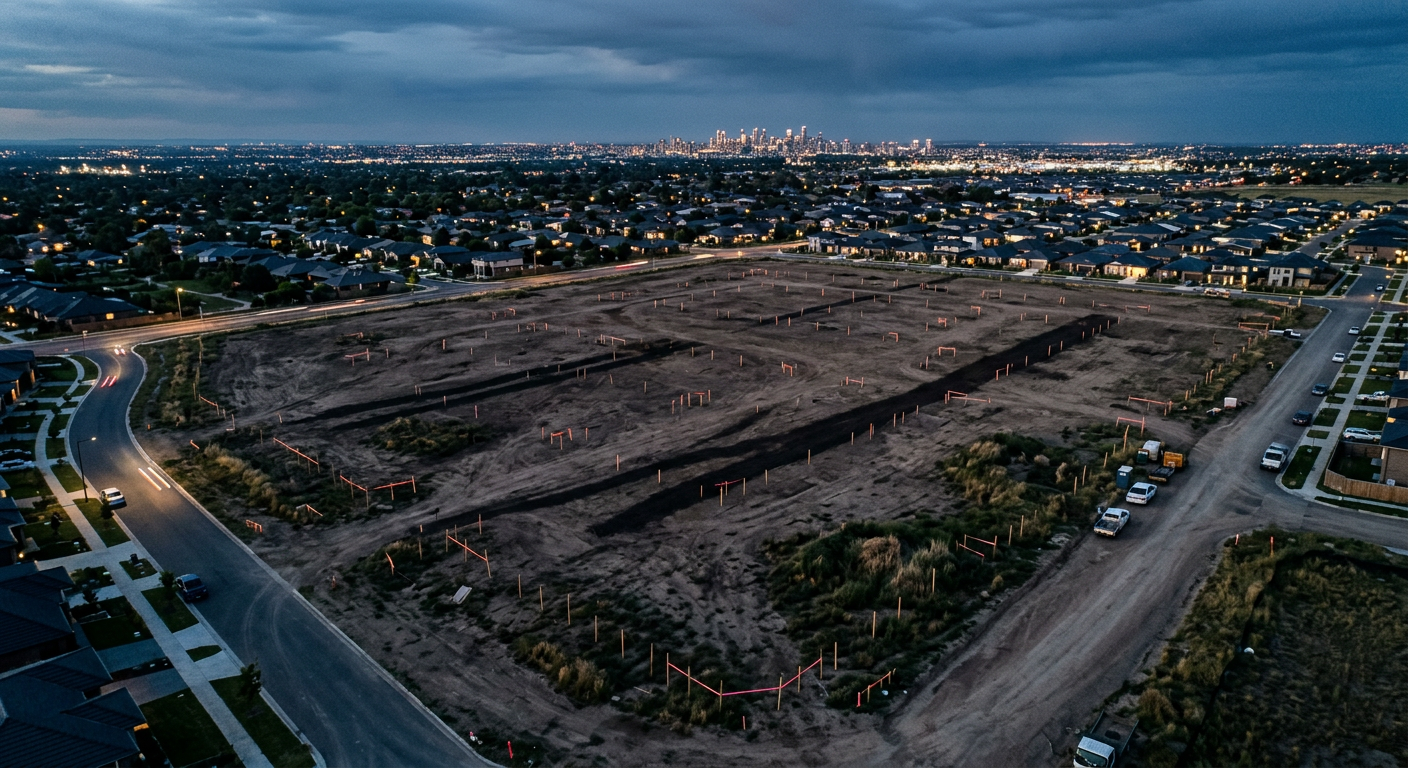
A patch of bare land in West Sacramento, once earmarked for 455 apartments, is now on the market for sale—a quiet but telling reversal that captures the mounting pressure on real estate developers navigating a market in flux. Turton Commercial has listed the 8.16-acre site, according to the Sacramento Business Journal, abandoning residential plans made just a few years ago when apartment construction seemed like a safe bet.
The pivot speaks to a broader unease rippling through commercial real estate. Developers who once rushed to build housing are now hitting pause, reassessing projects, or quietly offloading land as financing tightens and market fundamentals shift. What was supposed to be a straightforward multifamily play in West Sacramento has become yet another casualty of a sector struggling to find its footing.
The timing is particularly striking. West Sacramento has been positioning itself as a growth market, recently securing $43 million for housing and transportation projects, according to the Sacramento Business Journal. Yet even with public investment flowing in, private developers are backing away. The disconnect suggests that capital availability—not demand or political will—is the real constraint.
This isn't just a Sacramento story. Commercial real estate is under pressure across multiple markets and asset classes. In Macau, property consultancy Jones Lang LaSalle (JLL) reported that commercial property capital values are "remaining in a bottoming phase," with office values expected to fall another 5 percent in 2026 after dropping 7.9 percent in 2025. Prime street shops in Macau saw capital values decline 8.9 percent last year, and JLL forecasts shop values could fall by up to 5 percent more this year.
"With banks tightening lending for commercial property purchases, investment sentiment in Macau's commercial property market remains weak," said Mark Wong, senior director of value and risk advisory at JLL Macau. The closure of all satellite casinos in Macau by the end of 2025 has only deepened the pain, creating headwinds for commercial properties in districts where gaming venues once clustered.
The residential side isn't faring much better. In Macau, mass-market home values fell 16.5 percent in 2025, while high-end homes dropped 14.7 percent, according to JLL. The average transaction price for housing in Macau declined 16.7 percent to MOP 70,935 (US$8,828.7) per square meter, even as the government rolled out stamp duty exemptions and raised loan-to-value ratios to 80 percent in an effort to revive demand.
"The lack of major population policies and new large-scale infrastructure projects will continue to pose uncertainties to the long-term development of Macau's real estate market," Wong noted. That same uncertainty is playing out in West Sacramento, where developers are clearly questioning whether the fundamentals justify breaking ground on hundreds of new units.
The West Sacramento land sale also arrives as commercial real estate nationally grapples with structural challenges. Banks are pulling back on lending, construction costs remain elevated, and the gap between seller expectations and buyer willingness to pay has widened. For multifamily developers, the calculus has become particularly thorny: rent growth has slowed, operating expenses have climbed, and the cost of capital has made new projects harder to pencil.
What makes the West Sacramento case notable is what it represents—a project that was supposed to happen, that had approvals and plans, but is now being quietly shelved. It's the kind of non-event that doesn't make headlines but collectively signals a market in retreat. Developers aren't just slowing down; they're reassessing whether to build at all.
This dynamic is playing out in markets across the country. While Commercial Observer reported active leasing and development activity in major metros—Uber expanding by 86,000 square feet at 3 World Trade Center, Varda Space Industries signing a 205,000-square-foot lease in El Segundo—these are corporate relocations and expansions, not new speculative construction. The deals getting done are largely pre-leased or backed by creditworthy tenants. Speculative residential projects, by contrast, are facing a much tougher environment.
The question now is whether this represents a temporary pause or a more fundamental recalibration. In Macau, JLL expects the overall residential market to "remain broadly flat" in 2026, helped by lower interest rates and government stimulus. But the consultancy also warned that "limited end-user demand in the medium term will pose challenges for absorbing both public and private housing supply in the pipeline."
That same challenge looms over West Sacramento. Even if financing loosens and sentiment improves, developers will need to see clear evidence of absorption before committing capital to new projects. The 8.16-acre site now on the market is a bet that someone else—perhaps with a different timeline, different financing, or a different vision—will see value where the original developer did not.
For now, the land sits empty, a placeholder for a project that might have been. And in that emptiness, there's a larger story about a real estate market trying to find its footing in a world where the old assumptions no longer hold.