Supreme Court Blocks California's Transgender Notification Rules, Upholds NYC Republican District in Twin 6-3 Rulings
In back-to-back decisions, the Supreme Court's conservative majority sided with parents challenging California's policies on transgender students and Republicans fighting to preserve New York's 11th congressional district. Both rulings split 6-3 along ideological lines, with Justice Kagan accusing the court of 'whiplash' on parental rights.
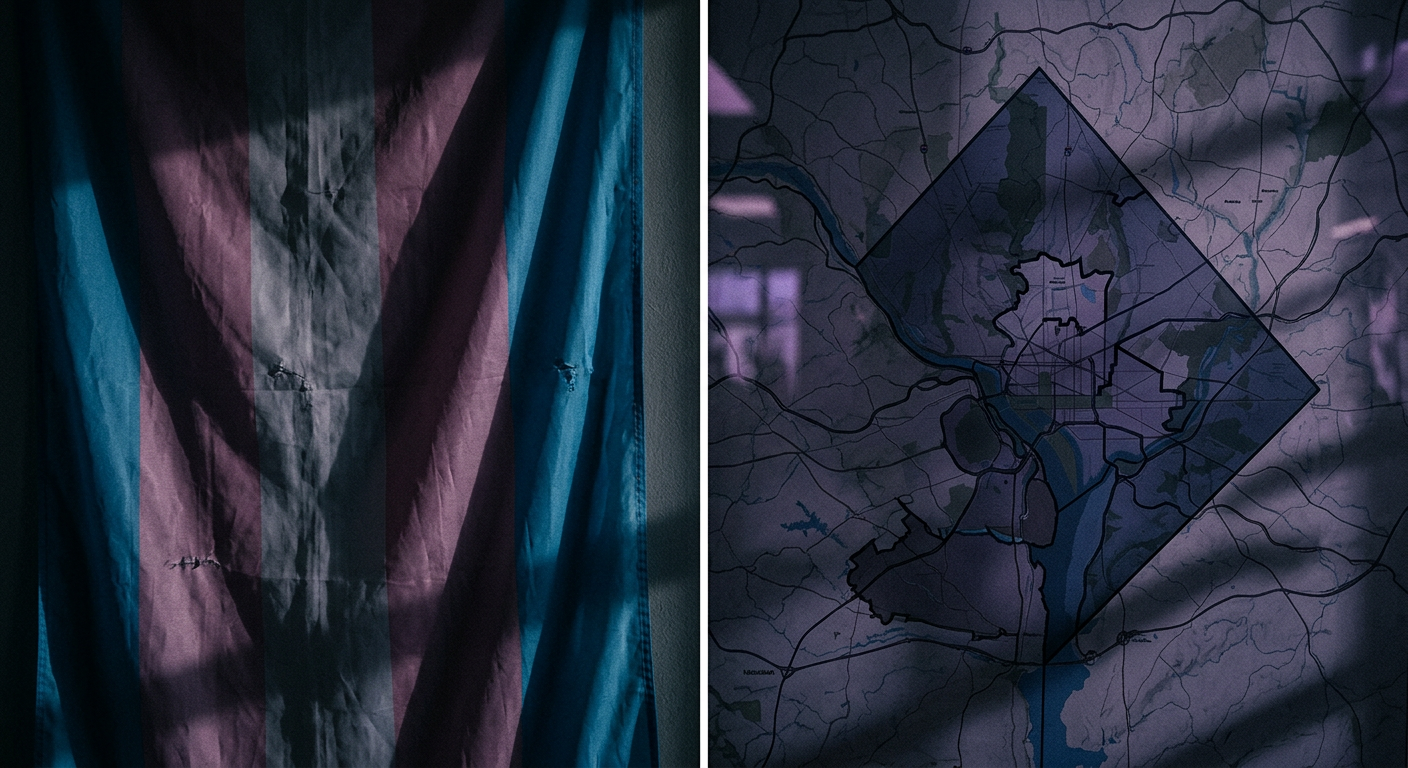
The Supreme Court delivered two significant victories to conservative causes on Monday night, blocking California from enforcing policies that restrict when schools notify parents about transgender students while simultaneously preserving New York City's only Republican-held congressional district for the 2026 elections. Both decisions split 6-3 along ideological lines, underscoring the court's rightward trajectory and its willingness to intervene in politically charged disputes.
The California ruling represents what the Thomas More Society, representing the parents, called "the most significant parental rights ruling in a generation." The court allowed a federal judge's decision to stand that prohibits schools from "misleading parents about their children's gender presentation" and requires schools to follow parents' instructions on names and pronouns. The parents had challenged state guidance documents issued by California's Education Department in 2016 and the attorney general's office in 2024, arguing they violated their constitutional rights to guide their children's education on religious grounds.
Writing for the unsigned majority, the court concluded that "the parents who seek religious exemptions are likely to succeed on the merits of their Free Exercise Clause claim," noting they "have sincere religious beliefs about sex and gender, and they feel a religious obligation to raise their children in accordance with those beliefs." The court went further, embracing a parental rights claim under the 14th Amendment's substantive due process clause — the same constitutional theory the court's conservative majority had rejected when it overturned Roe v. Wade in 2022.
Justice Elena Kagan seized on this contradiction in her dissent, joined by Justices Sonia Sotomayor and Ketanji Brown Jackson. The new ruling "cannot but induce a strong sense of whiplash," Kagan wrote, pointing out that the 1973 Roe decision had relied on an identical 14th Amendment theory. She also noted the court's selective application of parental rights claims, referencing last year's decision upholding state bans on gender transition treatments for transgender kids. In that case, the court "would not even hear the parents out on their substantive due process claim" from parents seeking gender-affirming care for their children.
The California guidance at issue specifically prohibits school boards from having "forced disclosure" policies requiring parental notification about gender identity in every circumstance, citing violations of state antidiscrimination law and students' privacy rights. State lawyers argued the policies "allow disclosure to parents in some circumstances and limit disclosure in others," balancing parental interests with "students' particular needs and circumstances, such as the risk of harm upon disclosure." California Attorney General Rob Bonta's office said it was "disappointed" but remains "committed to ensuring a safe, welcoming school environment for all students while respecting the crucial role parents play in students' lives."
Paul Jonna, one of the Thomas More Society's lawyers, declared the decision "told California and every state in the nation in no uncertain terms: you cannot secretly transition a child behind a parent's back." The ruling notably did not grant similar relief to teachers who objected to the policy on the same grounds.
Hours earlier, the court issued its New York redistricting decision, halting a state trial court order that would have required redrawing the 11th congressional district — encompassing Staten Island and southern Brooklyn — currently held by Republican Rep. Nicole Malliotakis. A New York state judge had ruled the district was drawn to dilute the voting power of Black and Hispanic residents, ordering the state's Independent Redistricting Commission to complete a new map.
Justice Samuel Alito wrote separately that the state judge's ruling amounted to "unadorned racial discrimination" in violation of the U.S. Constitution. The Supreme Court did not explain its full rationale, as is typical in emergency appeals, but the decision represents a critical victory for Republicans in the battle for House control. The GOP currently holds a razor-thin majority, and New York's 11th district is the only Republican-held seat in New York City.
Justice Sotomayor's dissent in the redistricting case accused the majority of abandoning longstanding principles of federal restraint. "Time and again, this Court has said that federal courts should not meddle with state election laws ahead of an election," she wrote, joined by Kagan and Jackson. "Ignoring every limit on federal courts' authority, the Court takes the unprecedented step of staying a state trial court's decision in a redistricting dispute on matters of state law without giving the State's highest court a chance to act."
The New York dispute emerged from the broader redistricting battle triggered when President Trump urged Texas Republicans to redraw congressional districts for political gain, prompting Democrats to counter with their own gerrymandering in California. The Supreme Court has allowed new maps in both California and Texas to proceed for 2026 elections despite ongoing legal challenges. A Democratic-affiliated law firm had argued the Staten Island district should swap its small Brooklyn section for a chunk of Lower Manhattan — areas where Trump lost to Kamala Harris by more than 50 points in 2024.
Malliotakis celebrated the ruling, declaring that "plaintiffs in this case attempted to manipulate our state's courts to use race as a weapon to rig our elections." New York State Republican Party Chairman Ed Cox praised the decision and criticized Democratic Governor Kathy Hochul for allowing the case to proceed. Qualifying for congressional elections in New York began last week, meaning any redistricting order would have created immediate logistical chaos.
Taken together, the twin rulings reveal a Supreme Court increasingly comfortable wielding emergency powers to reshape American politics and culture. The California decision expands parental rights using constitutional theories the same majority rejected for abortion rights. The New York ruling prioritizes Republican electoral interests over state courts' authority to interpret their own constitutions. Both decisions arrived on the court's "shadow docket" — unsigned, unexplained orders issued without full briefing or oral argument — a mechanism critics say allows the justices to make consequential policy without accountability.
The California ruling will reverberate far beyond one state's education policies. It establishes a constitutional framework for parents to claim religious exemptions from school policies on gender identity, potentially affecting transgender student protections nationwide. The New York decision ensures Republicans maintain their foothold in America's bluest city while the broader redistricting wars continue. And Justice Kagan's "whiplash" critique exposes the court's selective embrace of constitutional principles — parental rights matter when conservatives invoke them, but not when progressives do.
For the court's conservative supermajority, these are features, not bugs. They're methodically constructing a legal architecture where religious liberty claims trump LGBTQ protections, where partisan advantage outweighs voting rights, and where the 14th Amendment's meaning depends entirely on whose ox is being gored. The whiplash Kagan describes isn't accidental inconsistency — it's deliberate constitutional engineering.