The Quiet Power of Geneva: Why International Relations Still Matters in a Fragmented World
In 2012, Geneva hosted over 10,000 intergovernmental meetings—more than any city on Earth. As nationalism surges and multilateralism fractures, the machinery of international cooperation grinds on, largely invisible to a world that's forgotten why it exists.
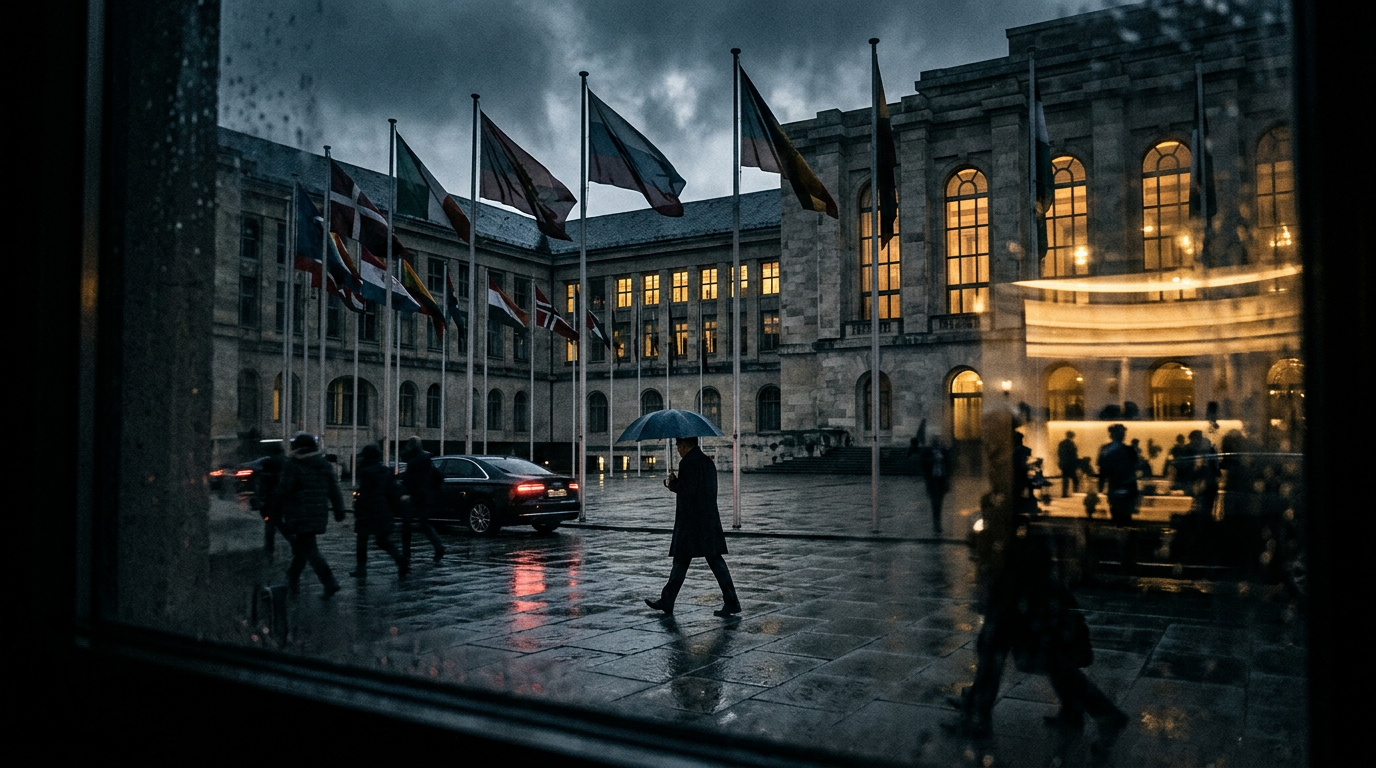
There's a peculiar irony in the fact that Geneva, a city of half a million people nestled against the Swiss Alps, hosts more international organizations than New York, Brussels, or any other global capital. In 2012 alone, the Palace of Nations saw more than 10,000 intergovernmental meetings—diplomats shuffling between conference rooms, negotiating treaties most people will never hear about, managing conflicts that never make headlines precisely because they were prevented. This is the unglamorous reality of international relations: thousands of technocrats working to keep the world from flying apart, while politicians back home score points by attacking the very institutions that make their comfortable lives possible.
The field of international relations—the academic discipline that studies how states interact, cooperate, and compete—traces its intellectual lineage back to Thucydides, the Greek historian who chronicled the Peloponnesian War with clinical precision. But as a formal area of study, IR is barely a century old. Aberystwyth University in Wales offered the first undergraduate degree in 1919, in the immediate aftermath of World War I, when the scale of industrial slaughter had convinced a generation of scholars that perhaps humanity needed to think more systematically about preventing the next catastrophe. It didn't work—World War II arrived right on schedule—but the discipline survived, shaped profoundly by the Cold War's geostrategic chess match between Washington and Moscow.
Today, international relations sits awkwardly between political science and a broader multidisciplinary field that encompasses economics, law, history, and even anthropology. At some institutions, it's a subdiscipline focused narrowly on state behavior and security studies. At others, like the London School of Economics, it sprawls across departments, examining everything from trade flows to human rights norms to the role of multinational corporations in shaping global governance. This institutional ambiguity reflects a deeper tension: is IR about understanding power politics between sovereign states, or is it about grasping the complex web of actors—IGOs, NGOs, corporations, terrorist networks—that actually drive events in the 21st century?
The dominant theoretical frameworks—realism, liberalism, constructivism—each offer partial answers. Realists see a world of states pursuing power and security in an anarchic system with no overriding authority. Liberalists emphasize institutions, economic interdependence, and the possibility of cooperation. Constructivists argue that ideas, norms, and identities shape state behavior as much as material interests. None of them predicted the Soviet collapse, the rise of China, or the return of great power competition that now defines our era. The late 20th century's globalization consensus—that economic integration would inevitably lead to political liberalization and peaceful cooperation—looks increasingly quaint as nationalism surges, supply chains fragment, and the United States and China decouple across technology, finance, and security domains.
What makes this moment particularly dangerous is not the return of geopolitical competition—that's the historical norm—but the erosion of the institutional architecture that managed previous periods of tension. The United Nations, World Trade Organization, and various arms control regimes were designed for a different world, one where American hegemony was unchallenged and most major powers accepted the basic rules of the post-1945 order. That world is gone. China seeks to reshape global institutions to reflect its authoritarian model. Russia has abandoned any pretense of integration with the West. Middle powers are hedging, refusing to choose sides in a new Cold War they never wanted. And the United States, exhausted by two decades of failed interventions and domestic polarization, oscillates between aggressive confrontation and isolationist withdrawal.
Yet those 10,000 meetings in Geneva continue. Diplomats still negotiate climate agreements, trade disputes, refugee flows, and disease outbreaks. The machinery of international cooperation—imperfect, frustrating, often ineffective—keeps grinding forward because the alternative is worse. Frederick Dunn, writing in the inaugural issue of World Politics, defined international relations as dealing with "relations that take place across national boundaries" in a system lacking overriding authority. That absence of authority is both the discipline's central problem and its enduring relevance. States remain sovereign. No world government exists to enforce rules or resolve disputes. Everything must be negotiated, bargained, threatened, or fought over.
The question now is whether the tools developed over a century of IR scholarship—balance of power, deterrence theory, institutional design, crisis management—can adapt to a world where the most pressing challenges are transnational rather than international. Climate change doesn't respect borders. Pandemics spread regardless of visa requirements. Financial contagion moves at the speed of fiber optics. Artificial intelligence development happens in corporate labs, not government ministries. The traditional focus on state-to-state relations feels increasingly inadequate when non-state actors wield such enormous influence.
This is why the definitional debates about whether IR is a subdiscipline of political science or a broader multidisciplinary field matter more than academic turf wars usually do. If we're serious about understanding how power works in the contemporary world—who has it, how it's exercised, what constraints exist—we need frameworks that can accommodate both the enduring reality of state sovereignty and the proliferation of actors who operate across, above, and below the state level. We need scholars who understand both game theory and anthropology, both military strategy and global supply chains, both diplomatic history and network analysis.
The field that emerged from the trenches of World War I now faces its own existential test. Can it evolve fast enough to make sense of a world where a single tweet can trigger a currency crisis, where private companies control critical infrastructure, where disinformation campaigns shape elections across dozens of countries simultaneously? Or will it remain trapped in frameworks designed for a Westphalian system of sovereign states that increasingly describes the form of global politics but not its substance? Those meetings in Geneva will continue either way—but whether they produce outcomes that matter depends on whether the people in those rooms understand the world they're trying to manage. Right now, that's far from certain.