Oil Surges Past $80 as Dow Plunges 784 Points on Iran War Fears, Recession Warnings Mount
West Texas Intermediate crude topped $80 per barrel for the first time since July 2024 after Iran struck an oil tanker, sending the Dow down 1.61% and triggering warnings that prices above $100 could spark a global recession. With 20% of the world's oil supply stuck in the Strait of Hormuz, investors are dumping economically sensitive stocks and questioning whether the U.S. can sustain its military commitment.
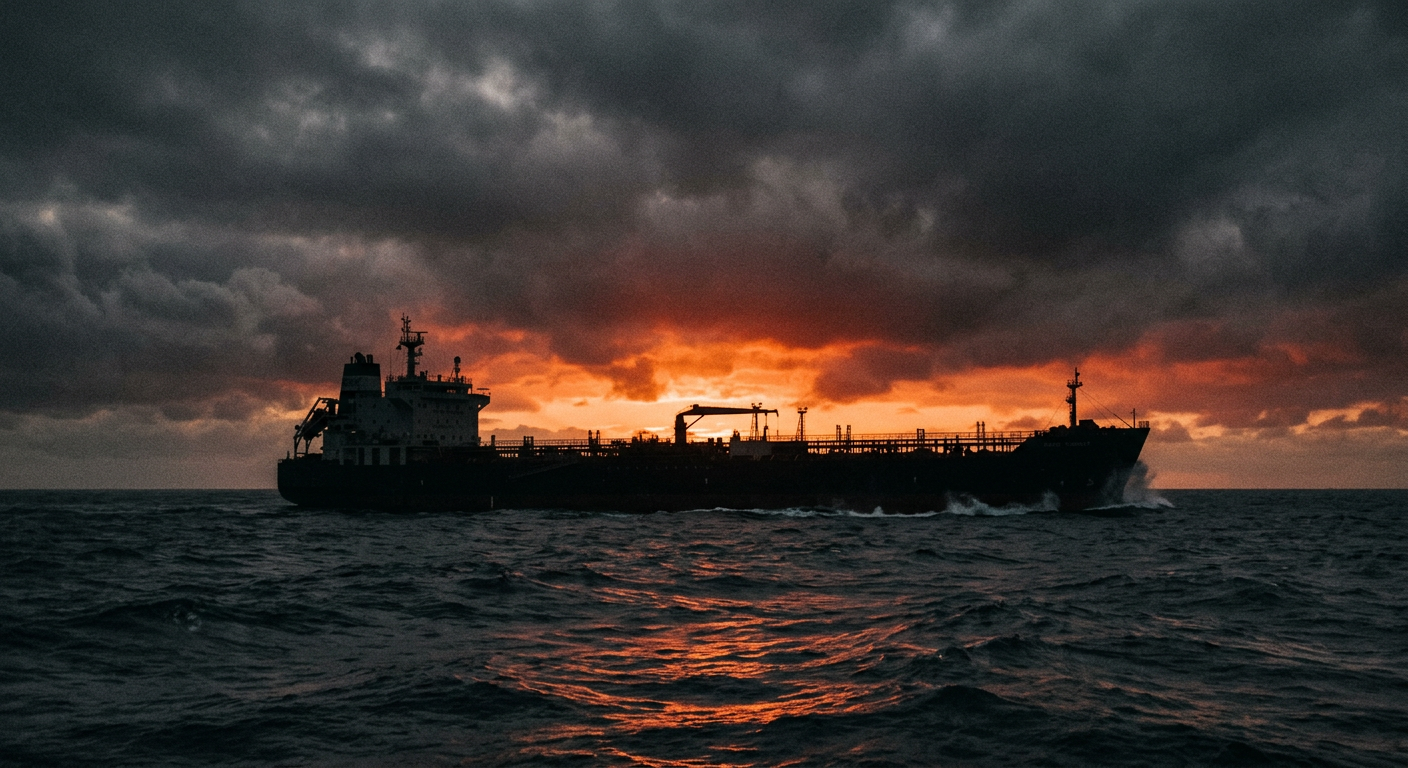
The stock market's brief respite evaporated Thursday as oil prices exploded higher and investors confronted the mounting economic toll of the U.S.-Iran conflict. West Texas Intermediate crude surged past $80 per barrel in afternoon trading — its highest level since July 2024 — after Iran announced it had hit an oil tanker with a missile, according to CNBC. The benchmark settled up more than 8% at $81.01, while international Brent crude jumped nearly 5% to $85.41.
The spike in energy prices hammered stocks. The Dow Jones Industrial Average fell 784 points, or 1.61%, to close at 47,954.74, with the index briefly down more than 1,100 points when crude breached the $80 threshold. The S&P 500 dropped 0.56% to 6,830.71, while the Nasdaq Composite slipped 0.26% to 22,748.99. Both WTI and Brent crude are on pace for their biggest weekly gains since March 2022, up more than 20% and 18% respectively this week.
The sell-off was led by companies most exposed to a global slowdown. Boeing, Caterpillar, and other industrial and materials stocks bore the brunt, with the S&P 500 Materials index down 2.4% and Industrials off 2.3% — the two worst-performing sectors. Caterpillar tumbled 4.4%, GE Aerospace fell 3.5%, and 3M dropped 3.3%. Small-cap stocks, typically more vulnerable to economic headwinds, suffered even more: the Russell 2000 plunged 2.7%, according to CNBC.
This is no longer just about geopolitical risk — it's about whether the global economy can withstand sustained energy price shocks. Dan Niles, founder of Niles Investment Management, laid out the stakes bluntly on CNBC's "Power Lunch": if crude oil climbs above $100 per barrel, "you're probably gonna end up with a global recession." Niles expects the conflict to last less than a month, but acknowledged that a prolonged war could push oil into triple digits and tip the world into contraction.
The Iran crisis is evolving in unpredictable ways. Iranian Foreign Minister Abbas Araghchi said Thursday that Iran is "not asking for a cease fire from the U.S. and Israel," adding that "we don't see any reason why we should negotiate," CNBC reported. Meanwhile, the White House has offered no timeline for when the Strait of Hormuz — responsible for roughly 20% of the world's oil supply — will be safe for tankers. Defense Secretary Pete Hegseth claimed Wednesday that the U.S. is "winning decisively" and that more forces are arriving in the region, but investors are clearly unconvinced.
"Can [President Donald] Trump really escort all of the vessels through the [Strait of Hormuz]?" asked Sam Stovall, chief investment strategist at CFRA Research, according to CNBC. "What kind of liability are we going to be putting on ourselves, and how would that affect our debt levels? Investors are basically saying that whatever is happening now is not good."
The market's fragility is evident in how quickly sentiment shifted. Just a day earlier, on Wednesday, the Dow had gained more than 200 points after oil prices stabilized. But that calm proved fleeting. The moment Iran escalated with the tanker strike, crude rocketed higher and stocks collapsed. The S&P 500 and Nasdaq both swung from just above the flatline at their session highs to down around 1.4% at their lows, illustrating the hair-trigger nature of this market.
Beyond the immediate war fears, investors are grappling with compounding uncertainties. Treasury Secretary Scott Bessent said Thursday that Trump's recently announced 15% global tariff will likely go into effect this week, adding another layer of economic anxiety. The Atlanta Federal Reserve's GDP Now tracker was showing 3.0% expected annual growth in the first quarter as of Monday, down slightly from recent readings, with the next update due Friday. If that number deteriorates further, recession fears could intensify.
Retail investor sentiment is already souring. Individual investors are the most "neutral" on their six-month stock outlook since January 2025, according to the latest weekly poll by the American Association of Individual Investors. Neutral sentiment jumped to 31.4%, up from 27.0% last week and the highest since 34.0% in mid-January 2025. Bullish investors remained stuck at 33.1% — the fewest since late November 2025 — while bearish sentiment dropped to 35.5% from 39.8%. In a special question about inflation, 38.7% of retail investors said price increases were slowing but not enough, while 33.3% said inflation was returning to a more acceptable pace. Almost a quarter said inflation is still rising too quickly.
Even traditional safe havens are faltering. Gold fell 1% to $5,080.86 on Thursday, failing to provide the refuge investors typically seek during geopolitical crises. That's a troubling sign: when neither stocks nor gold offer protection, it suggests investors are simply liquidating positions and moving to cash.
There were a few bright spots. Berkshire Hathaway gained more than 2% after disclosing it resumed share buybacks for the first time since 2024, with CEO Greg Abel personally purchasing $15 million worth of stock, according to CNBC. But that was an outlier in an otherwise brutal session.
The corporate earnings picture offered little comfort. Costco reported modest beats on earnings and revenue but saw its stock drift lower in extended trading, according to Yahoo News. Adjusted same-store sales growth of 6.7% was slightly below last year's pace. CEO Ron Vachris said on the earnings call that Costco plans to use any tariff refunds it receives from the U.S. government to create "lower prices and better values" for customers. The likelihood of such refunds increased this week after a federal judge affirmed that "all importers of record" would be entitled to refunds for tariffs paid under the International Emergency Economic Powers Act, which were struck down by the Supreme Court. But with $175 billion at stake and the Trump administration expected to appeal, Vachris cautioned that "it is not yet clear what the process will be, what refunds, if any, will be received and when this will happen."
Elsewhere, BJ's Wholesale Club missed revenue estimates and issued weak guidance, sending the stock down more than 4% in premarket trading. Burlington Stores beat on earnings and offered strong fiscal 2026 guidance, lifting shares more than 5% premarket. Kroger forecast tepid annual sales and profit under new CEO Greg Foran, disappointing investors. And Marvell Technology surged 14% in extended trading after beating first quarter revenue estimates on AI data center chip demand, with CEO Matt Murphy saying bookings are "continuing to grow at a record pace," according to Yahoo News.
But the real story is oil, and the real question is how long this lasts. Niles noted that the U.S. economy and oil prices recovered after the 2022 Russia invasion of Ukraine, leading the stock market to rally about 27% that year. But this feels different. The Strait of Hormuz is not Ukraine — it's a chokepoint for global energy flows, and Iran has shown it's willing to disrupt them. If traffic through the strait remains stuck and oil prices keep climbing, the economic damage could be severe and sustained.
The market is pricing in a scenario where the Iran conflict resolves quickly and oil prices retreat. But if Araghchi's defiant stance is any indication, that's wishful thinking. Iran has no interest in negotiating, and the U.S. has no clear exit strategy. The longer this drags on, the more likely Niles' nightmare scenario becomes: oil above $100, global recession, and a stock market that has much further to fall.
For now, investors are trapped in a waiting game. The Dow's 784-point plunge is a warning shot. If oil keeps rising and Iran keeps fighting, this could be just the beginning of a much uglier correction. The Atlanta Fed's GDP update Friday will be closely watched. So will any further escalation in the Middle East. Because at $80 oil, the market is nervous. At $100, it could be in full-blown panic.